Your Cat Was Calm Five Seconds Ago, So Why Is It Suddenly Sprinting Around the House?
Your cat has been asleep on the sofa for nearly an hour. The house is quiet, nothing unusual is happening, and you assume the evening is winding down. Then, without warning, your cat launches across the living room, races through the hallway, jumps onto a chair, changes direction, and disappears into another room at full speed.
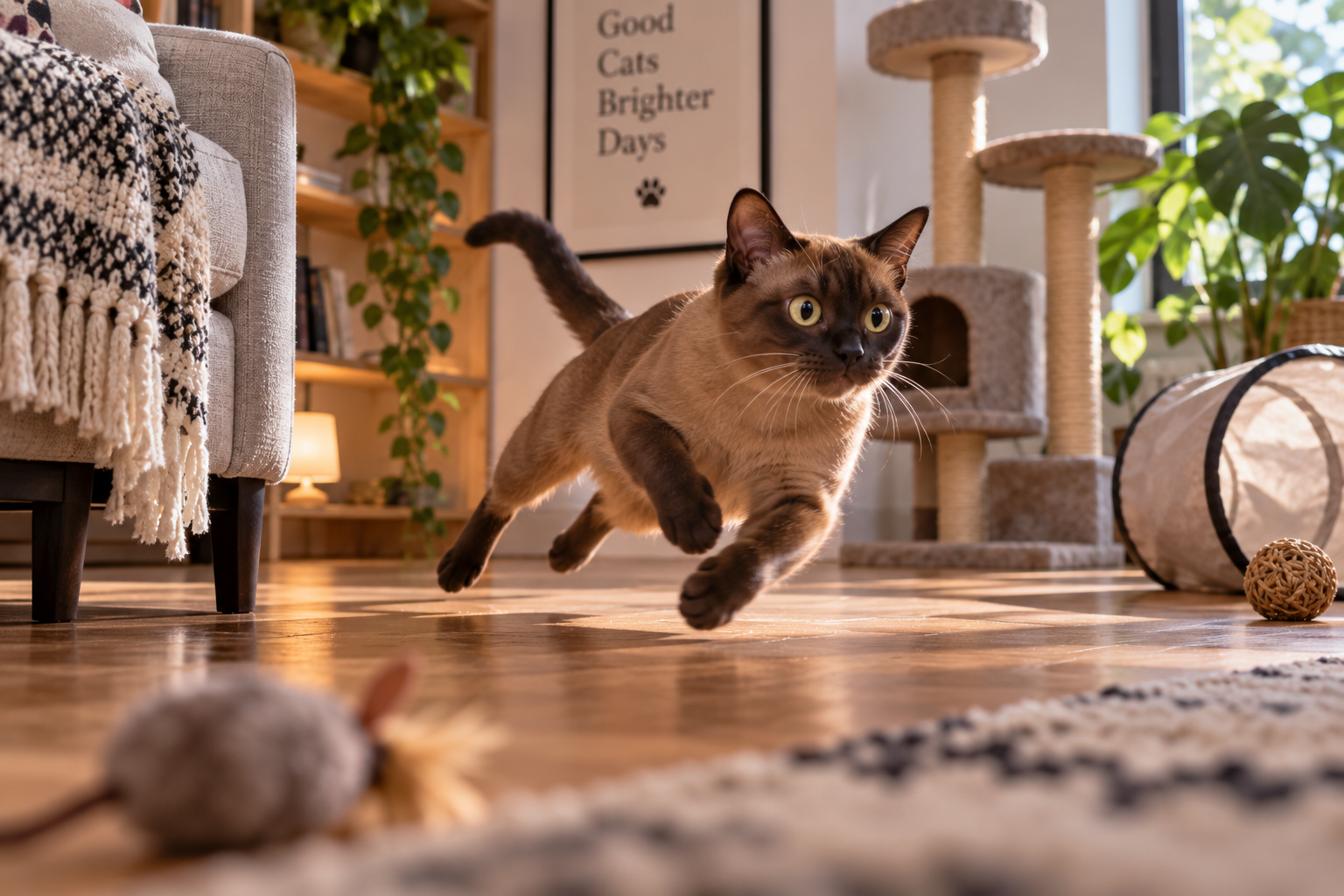
A few minutes later, the same cat is sitting peacefully and grooming as though nothing happened. These sudden bursts of activity are commonly known as cat zoomies, and they are especially noticeable in kittens, young cats, and energetic indoor cats.
Understanding why cats get the zoomies starts with recognizing that feline activity does not follow the same steady rhythm as human activity. Cats naturally alternate between long periods of rest and shorter periods of intense movement, while factors such as hunting instincts, age, indoor lifestyle, feeding schedules, and daily stimulation can influence when those energetic bursts appear.
What Are Cat Zoomies?
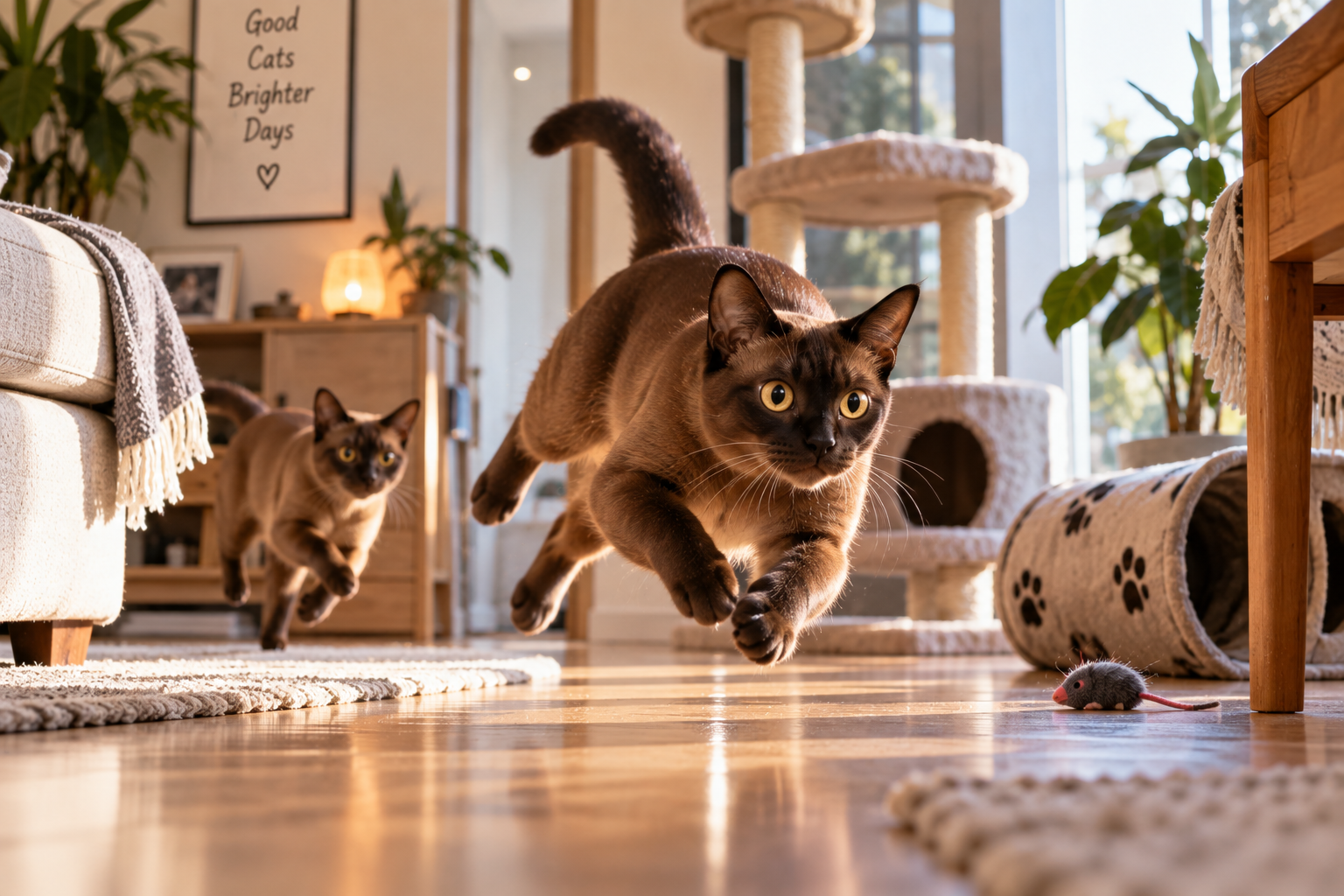
Cat zoomies are short, sudden periods of intense physical activity. During an episode, a cat may sprint between rooms, make sharp turns, jump onto furniture, chase toys, climb a cat tree, or run through the same route several times before abruptly stopping.
These episodes are sometimes described as Frenetic Random Activity Periods, or FRAPs. Despite their chaotic appearance, occasional zoomies are generally considered part of normal feline behavior when a cat otherwise appears comfortable, healthy, and able to settle afterward.
The frequency varies considerably between individual cats. Some may have a predictable burst of energy every evening, while others experience zoomies only occasionally. Age, temperament, environment, physical activity, and daily routine can all influence how often the behavior occurs.
Why Cats Get the Zoomies
The simplest explanation for why cats get the zoomies is that feline bodies are naturally suited to short bursts of intense movement. Cats may spend a large portion of the day resting, but that does not mean their need for physical activity disappears.
Unlike animals built for prolonged endurance, cats evolved as predators that rely heavily on quick acceleration. Hunting can involve waiting quietly for long periods before suddenly stalking, chasing, and pouncing on prey. Even when food comes from a bowl, many of those underlying behavioral patterns remain.
Stored Energy Can Lead to Sudden Activity
An indoor cat may spend several hours sleeping while everyone is away from home. There may be little movement, interaction, or environmental change during that period, so the cat has few reasons to become physically active.
Once people return, the environment changes. Doors open, lights turn on, food is prepared, people move between rooms, and the cat suddenly has several reasons to become interested in its surroundings. After hours of rest, that stored energy may appear as a dramatic sprint through the house.
This is particularly common among younger indoor cats that do not have enough opportunities to run, climb, chase, and explore throughout the day. The zoomies can become one of several ways that unused physical energy finds an outlet.
Hunting Instincts Still Influence Indoor Cats
Modern house cats may receive their meals from a bowl, but their bodies and behavior still retain many characteristics of natural hunters. A typical hunting sequence can involve watching, stalking, chasing, pouncing, catching, and then resting again.
Indoor play often imitates parts of this sequence. A toy mouse moving across the floor can trigger a chase, a feather disappearing behind furniture can encourage stalking, and another cat suddenly running through the hallway may activate the instinct to pursue.
These behaviors help explain why feline activity can change so quickly. A cat that appeared completely relaxed moments earlier can suddenly become intensely focused on movement because short, explosive activity is a normal part of feline behavior.
Why Cats Get Zoomies at Night
For many owners, the surprising part is not that their cat occasionally runs around the house. The bigger question is why it so often seems to happen just as everyone else is preparing to sleep.
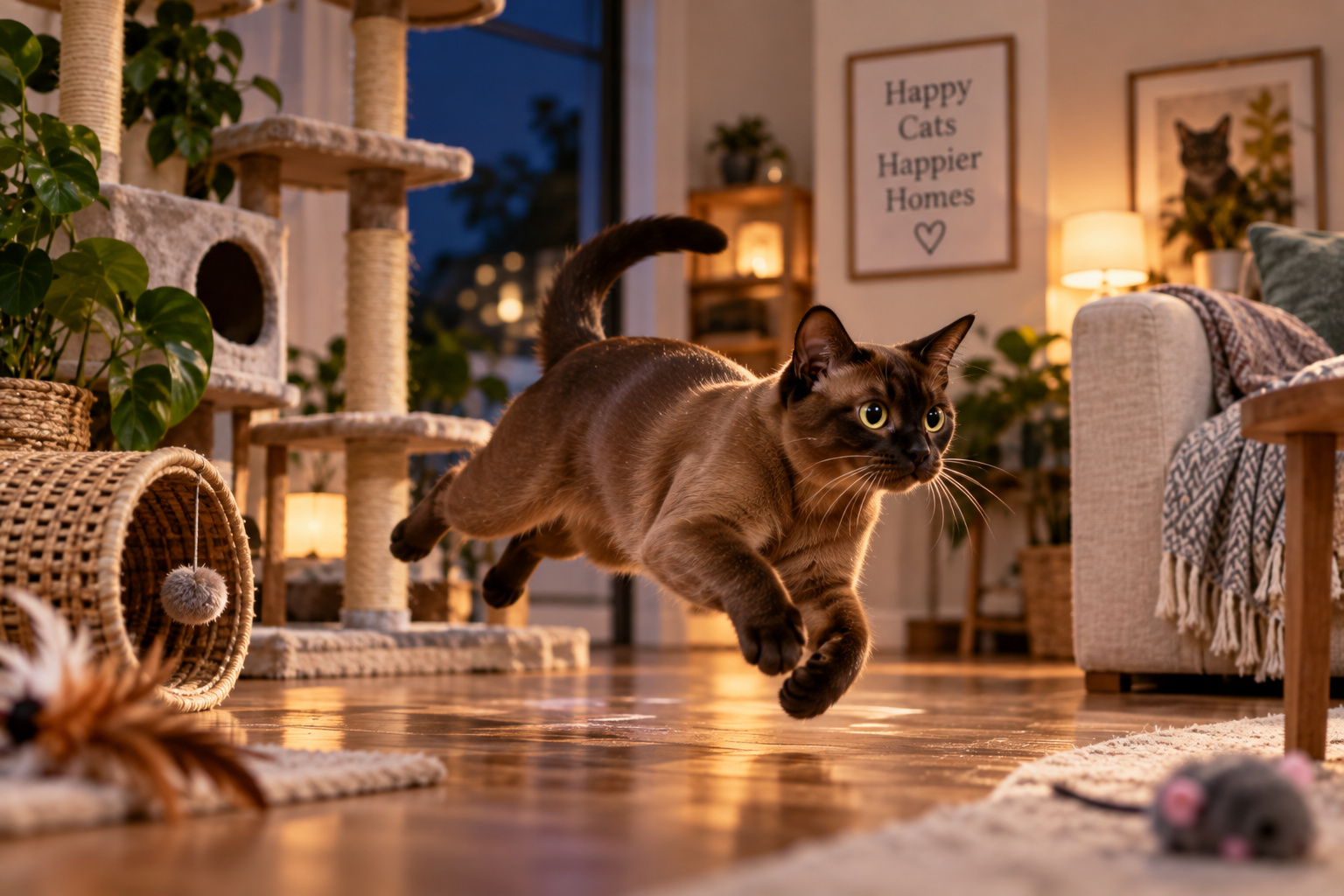
Nighttime cat zoomies can be influenced by both natural activity patterns and the cat’s daytime routine. A quiet indoor environment during the day may create the perfect conditions for a well-rested cat to become significantly more active in the evening.
Cats Are Often More Active Around Dawn and Dusk
Cats are commonly described as crepuscular, meaning their natural activity can increase around dawn and dusk. These periods historically provided useful opportunities for feline predators to search for and hunt prey.
Indoor living changes many aspects of a cat’s lifestyle, but it does not necessarily eliminate these behavioral rhythms. Your schedule may say that late evening is time to relax, while your cat’s natural activity cycle may be encouraging exploration and movement.
This is one reason why cats get zoomies at night, particularly when the behavior happens around a similar time each evening. The pattern may reflect a combination of natural feline rhythms and learned household routines rather than completely random hyperactivity.
Daytime Rest Can Create Evening Energy
A cat that sleeps for much of the day may simply have plenty of energy available by evening. This can become especially noticeable in households where owners work outside the home and the environment remains relatively quiet for several hours.
When the household becomes active again, the cat receives new stimulation from movement, conversation, food preparation, attention, and play opportunities. That transition can encourage activity at exactly the moment humans are beginning to slow down.
Providing appropriate stimulation earlier in the evening may help redirect some of this energy into structured activity rather than leaving the cat to create its own midnight exercise program.
How Age Influences Cat Zoomies
Age is one of the clearest factors influencing how frequently and intensely cats experience zoomies. A kitten’s activity pattern can look dramatically different from that of an adult or senior cat.
Kittens and Young Cats
Kittens naturally have high levels of play energy because movement is part of their physical and behavioral development. Running, climbing, wrestling, chasing, and pouncing help them practice coordination, balance, strength, and skills related to hunting.
This explains why kittens can appear completely exhausted one moment and race through the house shortly afterward. Their active periods can be intense, followed by equally dramatic periods of sleep.
A home with kittens should therefore provide safe opportunities for movement while limiting access to hazards. Electrical cords, unstable decorations, toxic plants, small swallowable objects, and fragile items should be kept away from areas where an energetic kitten can reach them.
Adult Cats
Healthy adult cats can continue having regular zoomies, although the frequency often depends more heavily on personality and lifestyle. Some adult cats remain highly playful, while others prefer shorter and less frequent bursts of activity.
Indoor adult cats may become particularly energetic when their environment lacks enough opportunities for movement. Regular play, climbing areas, scratching surfaces, and mental stimulation can help create healthier outlets for that energy.
An adult cat that has always had evening zoomies may simply be following a familiar behavioral pattern. A sudden major change in activity, however, deserves closer observation.
Senior Cats
Senior cats can still play, run, and occasionally experience zoomies. Age alone does not mean a cat should become completely inactive.
The important consideration with older cats is whether their behavior has changed significantly from their normal pattern. A senior cat that suddenly becomes unusually restless, vocal, confused, or hyperactive may need veterinary evaluation, especially when the change occurs alongside altered appetite, weight, thirst, sleep, or litter-box habits.
Knowing your cat’s usual behavior makes meaningful changes easier to recognize.
How Indoor Life Influences Cat Energy
Indoor cats live in a relatively controlled environment, which can protect them from traffic, predators, infectious exposure, and many other outdoor hazards. However, indoor living can also reduce the amount of natural movement and exploration available throughout the day.
A stimulating indoor environment does not need to be complicated. The goal is simply to provide safe opportunities for cats to perform normal behaviors such as climbing, scratching, chasing, observing, hiding, and searching.
Interactive Play Provides a Healthy Outlet
Interactive play is one of the most effective ways to give an energetic indoor cat structured physical activity. Wand toys and other appropriate cat toys can encourage stalking, chasing, and pouncing while allowing owners to control the intensity of the session.
Try moving toys in ways that resemble prey rather than constantly waving them directly in front of the cat. A toy can move across the floor, disappear behind furniture, pause briefly, and then move again. These changes encourage the cat to watch and stalk before beginning the chase.
It is also useful to let the cat successfully catch the toy occasionally. Completing the chase gives the activity a more natural ending and can make the play session more satisfying.
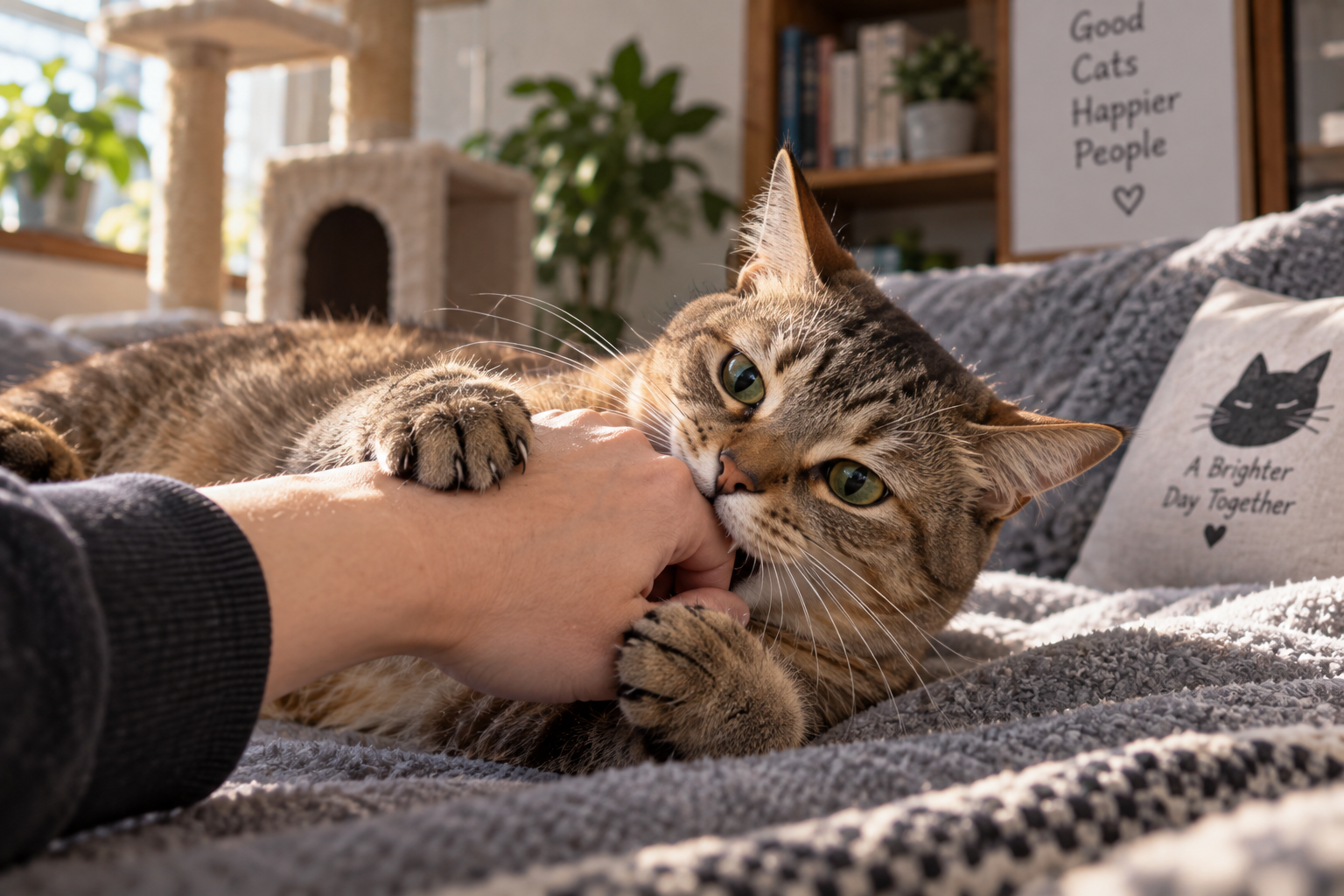
Hands and fingers should not become substitutes for toys. Teaching a kitten that human hands are acceptable hunting targets may become much less entertaining once that kitten grows into a strong adult cat.
Vertical Space Encourages Natural Movement
Many cats enjoy observing their surroundings from elevated positions. Stable cat trees, secure shelves designed for cats, and safe window perches can provide opportunities for both climbing and observation.
Vertical space can be particularly valuable in smaller homes because it expands the amount of usable territory without requiring additional floor space. It can also provide cats with places to retreat when they want distance from people or other pets.
Any climbing structure should be stable enough to handle jumping and sudden movement. Energetic cats can land with surprising force, so tall furniture that wobbles or tips easily should be secured or avoided.
Scratching Is Part of Normal Feline Activity
Scratching provides more than claw maintenance. It allows cats to stretch their bodies, mark areas, and perform a natural behavior that can become part of their daily physical activity.
Different cats prefer different scratching surfaces. Some like tall vertical posts, while others prefer horizontal cardboard scratchers or other textures.
Placement can be just as important as material. Cats frequently scratch after waking, so placing an appropriate scratching surface near a favorite resting location may make it more appealing than nearby furniture.
Mental Stimulation Can Reduce Restlessness
Physical activity is important, but an indoor cat also benefits from mental engagement. A cat can have plenty of toys and still become restless if the environment rarely provides anything new to investigate or solve.
Puzzle feeders can turn part of a meal into an activity by encouraging the cat to search or manipulate an object to access food. These should be introduced at an easy level so the cat can understand the task before the difficulty increases.
Secure window perches can also provide passive enrichment. Birds, leaves, people, and changing outdoor activity can give cats something interesting to observe without requiring constant human involvement.
Some cats also enjoy short reward-based training sessions. Learning simple behaviors such as touching a target, entering a carrier, or moving onto a designated mat can provide mental stimulation while making practical aspects of cat care easier.
How to Manage Nighttime Cat Zoomies
The goal should not be to eliminate normal feline activity. Instead, owners can try to shift some of that energy into appropriate activities before the household becomes quiet.
A predictable evening routine can be particularly useful for cats that consistently become active at bedtime. Start with an interactive play session that allows the cat to chase and pounce, then transition into the cat’s normal evening feeding routine if the timing fits its nutritional schedule.
This sequence loosely resembles a natural cycle of activity followed by eating and resting. It will not guarantee that every cat sleeps peacefully through the night, but it can give the cat an appropriate opportunity to use physical and mental energy beforehand.
Consistency matters more than trying to completely exhaust the cat. Several regular opportunities for activity throughout the day are generally more practical than relying on one extremely intense play session at night.
Feeding Schedules Can Affect Cat Activity
Cats quickly learn household patterns, including when meals normally appear. A cat may become noticeably more active as feeding time approaches, especially when meals happen at predictable times.
This anticipation can include running, following people through the house, vocalizing, or repeatedly visiting the feeding area. In these situations, some of what appears to be random hyperactivity may actually be connected to the expectation of food.
A consistent feeding routine can create useful predictability. However, owners should be careful about repeatedly offering food immediately after disruptive attention-seeking behavior, because the cat may learn that certain actions reliably produce a reward.
Understanding this connection between food and indoor cat behavior can make seemingly random bursts of activity easier to interpret.
Why Cats Sometimes Run After Using the Litter Box
Some cats have a very specific version of the zoomies: they calmly enter the litter box, finish eliminating, and immediately race through the house.
There is no single explanation that applies to every cat. Post-litter-box running may be related to relief, physical sensations associated with elimination, excitement, or simply an individual behavioral habit that has developed over time.
When the behavior is familiar and the cat otherwise appears comfortable, occasional running after using the litter box may not be concerning. What matters is whether the behavior occurs alongside signs suggesting that elimination has become uncomfortable or difficult.
Straining, repeated unsuccessful attempts to urinate or defecate, crying in the litter box, blood, significant stool changes, unusually frequent visits, or obvious discomfort should not be dismissed as ordinary zoomies. Difficulty urinating can become particularly serious in cats and may require prompt veterinary attention.
Zoomies in Multi-Cat Households
One energetic cat can sometimes trigger another. A cat begins running through the hallway, the second cat notices the movement, and within seconds the entire house has become a feline racecourse.
This can be normal social play when both cats appear relaxed and willingly participate. Healthy chasing often involves changing roles, with each cat having opportunities to pursue, retreat, and return to the interaction.
Persistent one-sided chasing is different. If one cat repeatedly hides, hisses, growls, flattens its ears, avoids certain areas, or appears unable to escape the other cat, the interaction may involve tension rather than play.
Multi-cat homes also need enough important resources. Separate resting areas, suitable litter-box arrangements, food and water access, scratching surfaces, hiding locations, and vertical spaces can help reduce competition and give each cat greater control over its environment.
When Cat Zoomies May Signal Stress
Not every burst of movement represents playful excitement. Cats may also run after becoming startled or highly aroused by something in their environment.
Visitors, loud noises, unfamiliar animals outside a window, furniture changes, renovations, or disruptions to household routines can all influence feline behavior. A frightened cat may suddenly run toward a hiding location rather than engaging in playful zoomies.
Body language provides useful context. A playful cat may run, stop, investigate, and voluntarily return to interaction, while a stressed cat may remain tense, hide for an extended period, flatten its ears, avoid contact, or stay unusually alert.
If stress appears to be the trigger, provide access to a quiet and secure location rather than chasing or forcing interaction. Predictable feeding, play, resting areas, and household routines can also help some cats feel more secure.
When Sudden Hyperactivity Needs Veterinary Attention
Occasional cat zoomies in an otherwise healthy cat are usually very different from a sudden, persistent change in behavior. The individual cat’s normal pattern should always be the reference point.
Pay closer attention when unusual hyperactivity occurs alongside unexplained weight changes, major appetite changes, increased thirst, persistent vocalization, sleep disruption, elimination problems, confusion, apparent pain, or significant changes in social behavior.
Changes in movement can also provide important clues. Reluctance to jump, stiffness, difficulty using stairs, sensitivity to touch, altered grooming habits, or unusual posture may suggest that something beyond ordinary energetic behavior is happening.
This is particularly important for senior cats, whose behavioral changes can sometimes accompany underlying medical conditions. A veterinarian can evaluate activity changes alongside the cat’s age, health history, physical condition, and any additional symptoms.
Creating a Better Routine for an Energetic Indoor Cat
Managing an energetic cat is less about stopping zoomies and more about creating appropriate ways for the cat to use its body and brain. A balanced indoor routine can include interactive play, climbing opportunities, scratching areas, observation points, mental enrichment, predictable meals, and comfortable places to rest.
Pay attention to when your cat naturally becomes active. If the biggest energy burst consistently occurs late at night, move an engaging play session slightly earlier and observe whether the pattern changes. If the cat becomes restless after long periods alone, consider adding safe enrichment that can be used independently during the day.
Toy rotation can also maintain interest without filling the house with dozens of objects. Keep several safe options available and periodically swap them with toys stored elsewhere. Something that disappeared for a week can suddenly feel new again when it returns.
Most importantly, build the routine around the individual cat. Some cats are enthusiastic climbers, some prefer chasing objects across the floor, and others are happiest solving food puzzles or watching the world through a secure window.
Keep the Zoomie Route Safe
Many cats eventually develop a preferred route when they sprint around the house. The hallway leads to the living room, the living room leads to the sofa, the sofa becomes a launch platform, and somehow the entire sequence ends exactly where it started.
Once you recognize that route, keeping it reasonably clear can reduce unnecessary hazards. Loose electrical cords, unstable decorations, fragile objects near edges, toxic plants, and small items that could be swallowed should be kept out of easily accessible areas.
Slippery flooring may also deserve attention, particularly for older cats or cats that frequently lose traction while running. Rugs or runners can provide better footing in areas where high-speed activity regularly occurs.
A cat will not understand that the expensive vase was placed directly beside turn three of the household racetrack. Creating a safer environment is generally easier than expecting an excited cat to suddenly become cautious.
Conclusion
So, why do cats get the zoomies when they seemed perfectly calm only seconds earlier? In most cases, the answer is a combination of natural feline activity patterns, stored energy, hunting instincts, age, environmental stimulation, and daily routine.
For indoor cats, regular opportunities to chase, climb, scratch, explore, and solve simple problems can provide healthier outlets for that energy. Evening play and predictable routines may also help when nighttime cat zoomies regularly appear just as everyone else is trying to sleep.
The most important thing is to understand what is normal for your individual cat. A familiar burst of playful running is very different from a sudden behavioral change accompanied by pain, elimination problems, appetite changes, confusion, or other unusual symptoms.
And if your healthy cat suddenly launches from the sofa, races through three rooms, performs an unnecessary jump, and returns five minutes later looking completely relaxed?
Your cat probably has not lost its mind.
It may simply have had some energy to spend.
Unfortunately, your living room was selected as the track.