
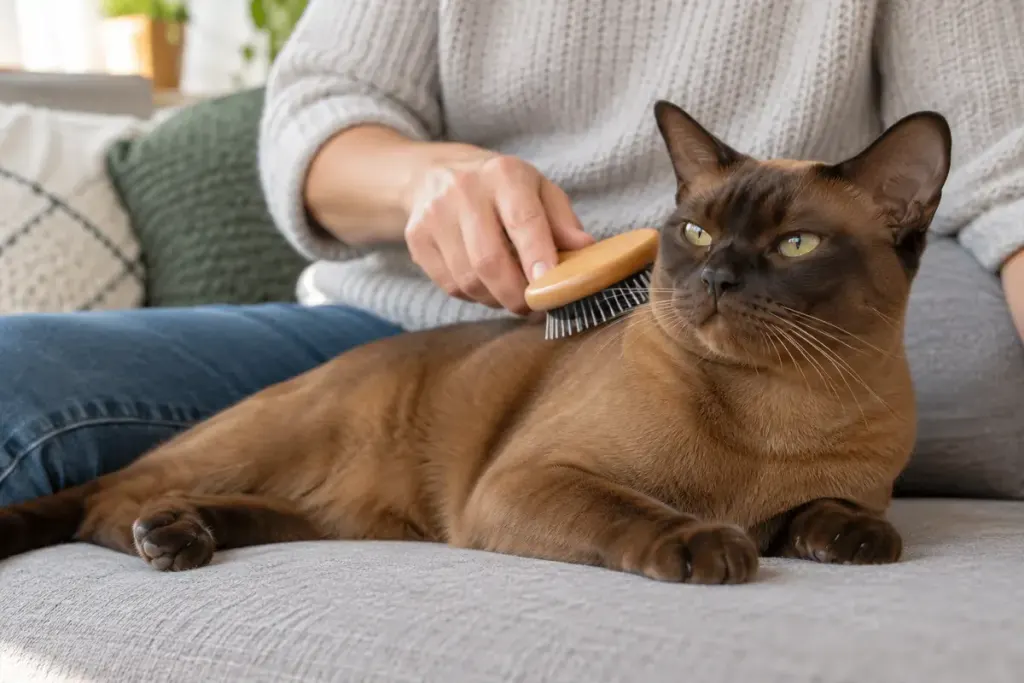
A cat that walks away from a brush is giving you useful information. Holding the cat more firmly may complete today’s task, but it can make the next session harder. For routine grooming practice, begin with an amount of contact the cat can comfortably accept.
Cats Protection’s grooming guidance recommends introducing grooming gradually and using as little restraint as possible. The appropriate tool and routine depend on the individual cat and coat, not simply the breed name.
Let the brush become familiar
Choose a quiet moment when the cat is relaxed and able to leave. Place the suitable brush nearby without immediately reaching toward the cat. Keep your own movements calm. The first practice can be about accepting the object in the space rather than brushing the whole body.
If the cat remains comfortable, try a brief gentle stroke in an area where it normally accepts touch. Pause and observe. Turning away, tense posture, tail movement or attempts to leave are reasons to stop and reconsider the session, not instructions to restrain harder.
Keep a simple record of what works
Note which tool, location and type of contact the cat accepted. A tiny comfortable session provides more useful progress than a long struggle followed by avoidance. Build gradually at the cat’s pace and use appropriate rewards if they are helpful for that individual.
Do not practise by pulling through painful mats or brushing irritated skin. Significant tangles, wounds or a sudden change in grooming tolerance need veterinary guidance. Avoid trying to cut close-to-skin mats with household scissors.
Separate training from an urgent care need
A cat that urgently needs coat care may require professional help while a gradual handling plan is developed. Ask your veterinarian about the safest approach. Routine practice should leave the cat with a manageable experience, while medical or painful problems receive the attention they need.