
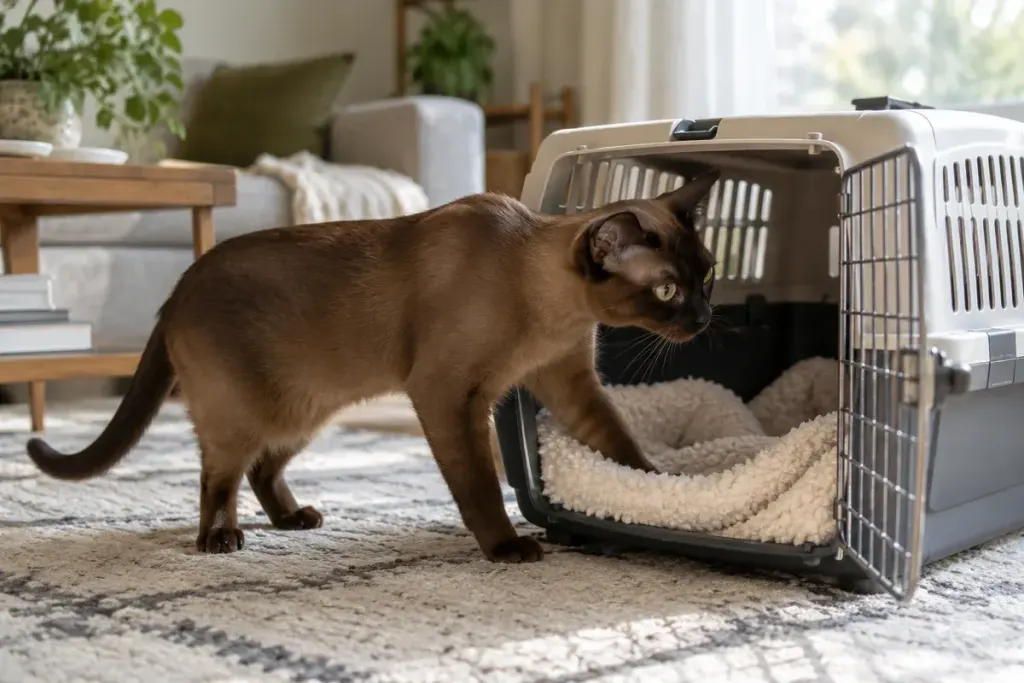
If the carrier appears only before a veterinary visit, its arrival can become a signal that something unwelcome is about to happen. Leaving a suitable carrier as part of the room gives a cat opportunities to investigate it without an immediate journey. This can help a Burmese cat or any other cat, but progress depends on the individual.
Choose a secure, appropriate carrier in good condition and follow its instructions. A familiar carrier still needs to be safely closed and supported during travel; comfort at home does not replace secure transport.
Let the first step be small
Put the open carrier in a calm, accessible place with familiar bedding. Let the cat approach voluntarily. A treat or toy nearby may encourage curiosity, but avoid using it to lure the cat into a surprise confinement. The aim is a predictable experience.
International Cat Care’s guide to veterinary visits describes gradual carrier familiarisation and allowing time for each stage. Do not rush to the next step because a timetable says the cat should be ready.
Notice comfortable behaviour
Look for voluntary entry, relaxed investigation or resting near the carrier. A cat remaining still is not automatically relaxed. If it avoids the area or becomes distressed, reduce the challenge and discuss the approach with your veterinary team when needed.
Practise short, manageable stages: approaching, entering and remaining comfortable. Closing the door briefly comes later, followed by reopening it before the situation becomes a struggle. Moving and carrying the carrier are additional stages, not details to add all at once.
Prepare for the real journey separately
Check the door, fastenings and base before travel. Support the carrier properly and follow transport guidance from the manufacturer and veterinary team. Do not open it in an unsecured outdoor area or vehicle simply because the cat seems settled.
When a necessary appointment is approaching and training has not progressed, contact the clinic for advice. Do not delay urgent care while waiting for a perfect training result, and do not use sedatives without veterinary direction.
Keep the carrier available after a trip instead of immediately hiding it away. Refresh bedding as appropriate and continue calm, voluntary interactions. The useful change is a carrier that belongs to ordinary life, rather than an object whose every appearance predicts a stressful departure.
Another practical question: Make a Short Cat Play Session More Interesting.