
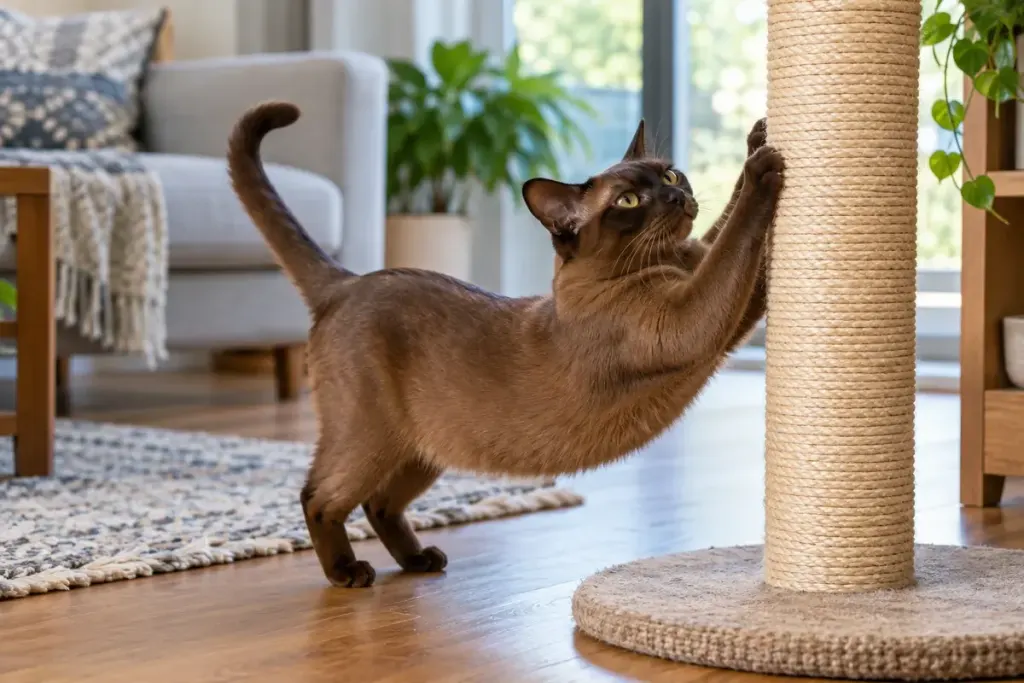
You find a small curved piece of claw beside the scratching post. It can look alarming, especially if you have never noticed one before. A shed outer sheath is different from the whole claw being torn away.
As claws renew, the outer layer can be shed. Scratching helps with that process. Cats Protection’s claw-care guidance explains normal claw maintenance alongside advice about checking and trimming claws.
Look at the cat, not only the piece on the floor
A hollow, curved shell found near a scratching surface may be a shed sheath. But a loose object alone cannot establish the condition of the cat’s paws. Notice whether the cat walks normally, uses the paw comfortably and behaves as usual.
If the cat tolerates a gentle check, look without pulling at a claw or forcing the toes apart. Stop if the cat is distressed. Do not assume that every fragment is harmless simply because normal shedding exists.
Bleeding, pain, swelling, limping, repeated attention to a paw or a visibly damaged attached claw are reasons to contact a veterinary professional. An uncertain or painful paw should not become a home experiment with clippers.
Support the routine without forcing it
Keep suitable scratching surfaces available in places the cat uses. Notice whether the preferred surface is vertical or horizontal and whether it remains stable during use. A post that wobbles can be less inviting than its size suggests.
When cleaning around it, note any changes over time rather than counting every sheath as a problem. If you are concerned, a clear description of the cat’s behaviour and what you found is useful information for the vet.
Do not pull a partly attached layer away or cut a claw simply to remove an unusual-looking piece. If trimming is needed, get guidance appropriate to the individual cat and your ability to handle it safely.
The practical distinction is between a normal maintenance sign and evidence of discomfort or damage. A small shell by a well-used post may fit the first picture; a sore paw needs attention regardless of what the fragment looks like.