
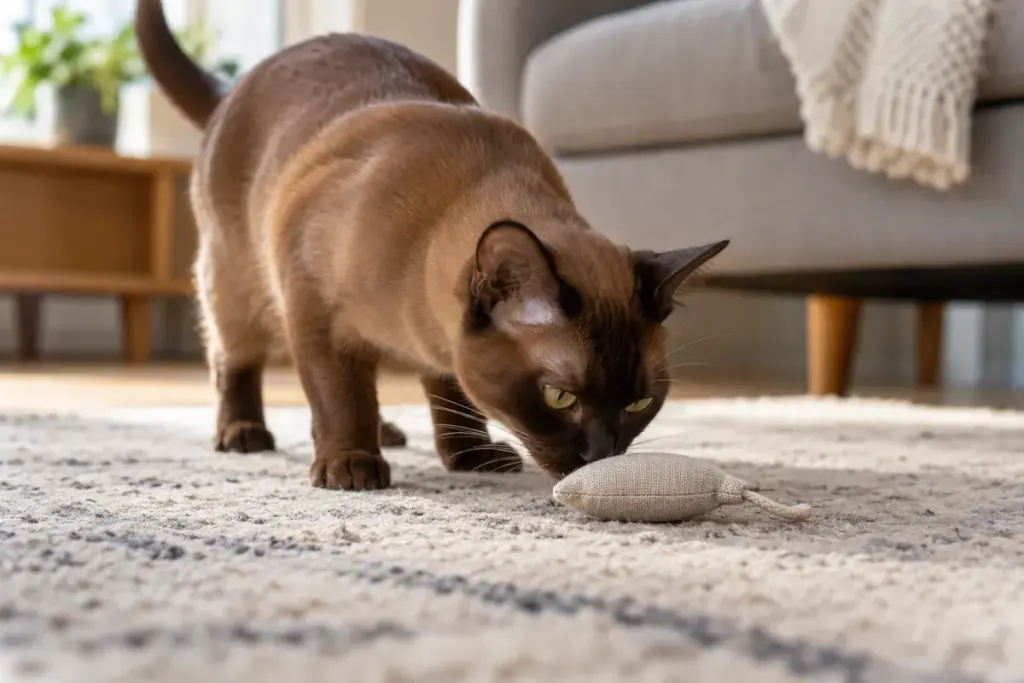
One cat rolls beside a catnip toy while another walks past it. Neither response tells you whether the second cat is bored, unwell or difficult to entertain. Cats differ in their interest in these scents, and a single ignored toy is a small observation rather than a diagnosis.
A published study of cats’ responses to catnip, silver vine and other plants found that responses varied between cats and materials. Some cats that did not respond to catnip responded to silver vine. That finding supports trying appropriate alternatives, not assuming that every product or every cat will produce the same result.
Offer an invitation rather than insisting on a reaction
Choose a product specifically intended for cats and follow its instructions. A well-made toy can keep the material contained, but inspect it for loose parts and damage before use. Stay nearby during an initial introduction and give the cat enough space to investigate or leave.
Do not hold a toy against the cat’s face or keep presenting it when the cat moves away. Interest may take the form of sniffing, rubbing or brief play rather than an exuberant reaction. Observe the whole animal and end the session if it appears distressed.
Keep the experiment small
Change one thing at a time. If a cat ignores a toy, presenting five new scented products together makes it difficult to understand what interested it. Note the material, the toy’s form and the setting, then let the cat’s behaviour guide whether it deserves a place in the enrichment routine.
Do not substitute essential oils or unidentified garden plants for a cat-specific product. Research on a particular plant exposure does not establish the safety of every extract, concentration or way of using it.
Scented toys are also not a treatment for anxiety, pain or a sudden change in behaviour. If a cat’s general interest in play, appetite or activity changes, discuss that wider pattern with a veterinarian. For everyday enrichment, the aim is choice: a suitable scent can be one option among hiding places, movement, exploration and relaxed interaction.