
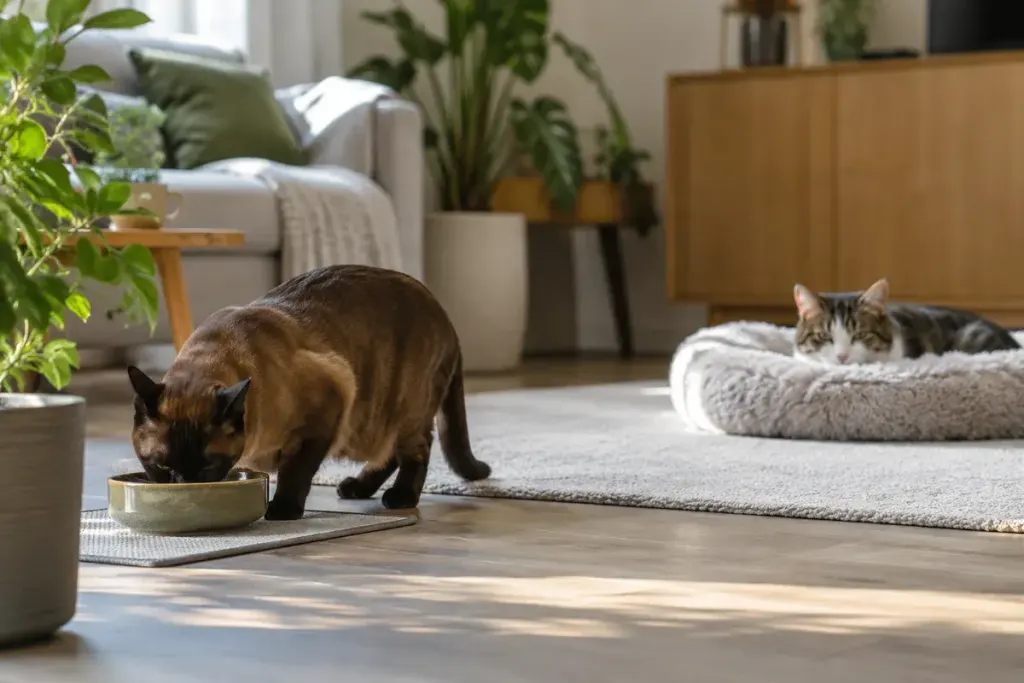
Two food bowls sit neatly beside each other, yet one cat waits until the other leaves before approaching. The household has provided two bowls, but perhaps only one comfortable feeding location.
In a multi-cat home, the arrangement of resources matters alongside their number. Cats should have meaningful options to eat, drink, rest and use litter facilities without unwanted pressure.
Look at access from the cat’s viewpoint
Notice narrow routes, corners and places where one cat can watch or block another. A resource at the end of a hallway may be easy for a person to reach but less comfortable for a cat sharing the space.
The AAFP and ISFM environmental-needs guidelines describe the importance of multiple, separated resources. The feline veterinary client guidance also highlights visual separation between cats’ resources.
Separate functions and offer choices
Plan appropriate locations for food, water, litter, scratching, play and rest. Do not place everything in one crowded “cat corner” merely because it looks organised. The right arrangement depends on the home and the relationships between the cats.
Provide resting options at suitable heights and in quiet locations where each cat can withdraw. Check that older cats or cats with mobility difficulties can reach what they need comfortably; ask a veterinarian about individual requirements.
Watch for quiet changes
Conflict is not always a loud fight. Waiting, avoiding a room or changing feeding times can be useful observations. Record patterns without assuming every change is social: appetite, toileting or movement changes can also have medical causes.
If a cat stops eating, seems unwell or develops a new litter-box problem, seek veterinary advice rather than relying only on a furniture rearrangement. Behaviour and health need to be considered together.
Change the layout thoughtfully
Add suitable options and observe how the cats use them. Avoid removing familiar resources abruptly in an attempt to force a new pattern. A qualified feline behaviour professional working with your veterinarian can help when tension persists.
Burmese cats are individuals, just like cats of any breed. A reputation for sociability does not establish that every pair wants to share every space. A successful home layout gives each cat access and choice, even when the cats also enjoy spending time together.