
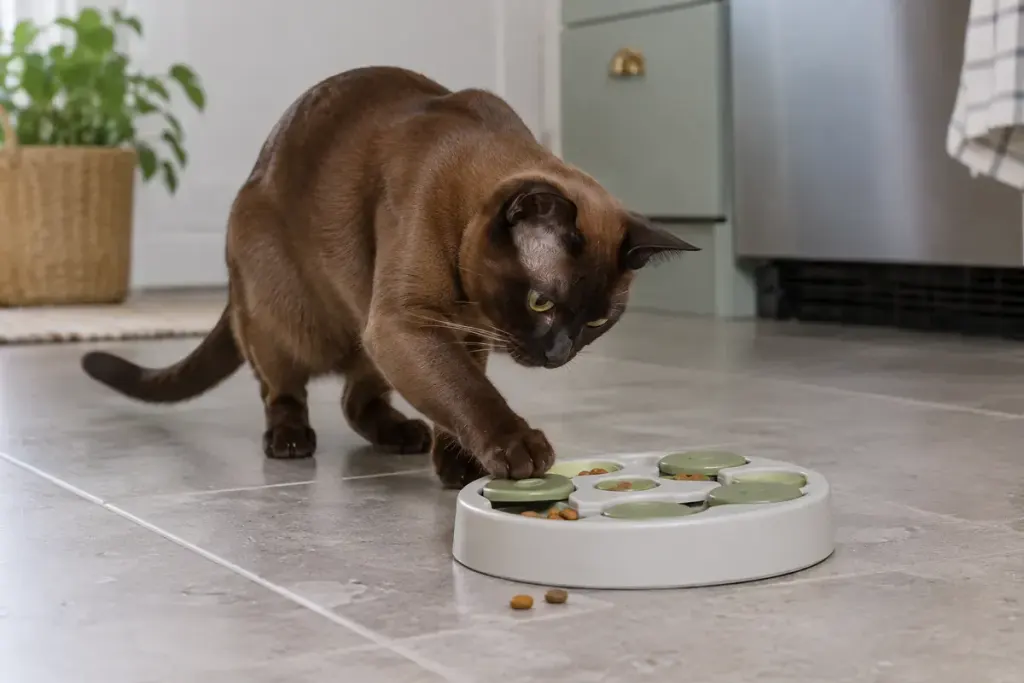
A new food puzzle should not begin with a hungry cat staring at an impossible box. The first task is to make the connection clear: investigating this object can lead to food, and the food is accessible.
Cats Protection’s feeding-enrichment guidance offers ways to introduce puzzles and adapt them to a cat’s needs. A Burmese cat still deserves an individual approach; breed descriptions do not tell you which puzzle a particular cat will enjoy.
Make the first success obvious
Choose a stable, easy-to-clean design suitable for your cat and the food you use. Begin with food clearly visible and easy to reach. You can demonstrate where it is, but avoid repeatedly moving the cat’s paws or forcing interaction.
Use part of the cat’s normal food allowance, following any veterinary feeding plan. Adding a large amount of treats on top of regular meals changes more than the enrichment routine.
Introduce the puzzle in a quiet place where another animal cannot take over. Watch whether your cat approaches, sniffs, paws gently or walks away. Walking away is useful feedback, not a reason to withhold ordinary access to food.
Change one difficulty at a time
Once the easy version is familiar, make a small adjustment such as placing food slightly farther inside the same safe design. Avoid changing the location, container and food all at once; you will have little idea which change helped or discouraged the cat.
Check for sharp edges, loose pieces and openings that could trap a paw or head. Supervise introductions and remove damaged equipment. A homemade object is not automatically suitable simply because its materials came from the kitchen.
Notice when the task is not the issue
Age, mobility, vision and dental comfort can affect how a cat uses a puzzle. Persistent difficulty may call for an easier format rather than more practice.
A change in appetite, chewing or general behaviour warrants veterinary advice; a puzzle is not a way to diagnose or treat the cause. Keep food-contact surfaces clean and follow safe storage guidance for the food used.
The best first puzzle is the one your cat can understand and use comfortably. Complexity can wait. A short, successful exploration tells you more than an elaborate feeder that remains untouched.