
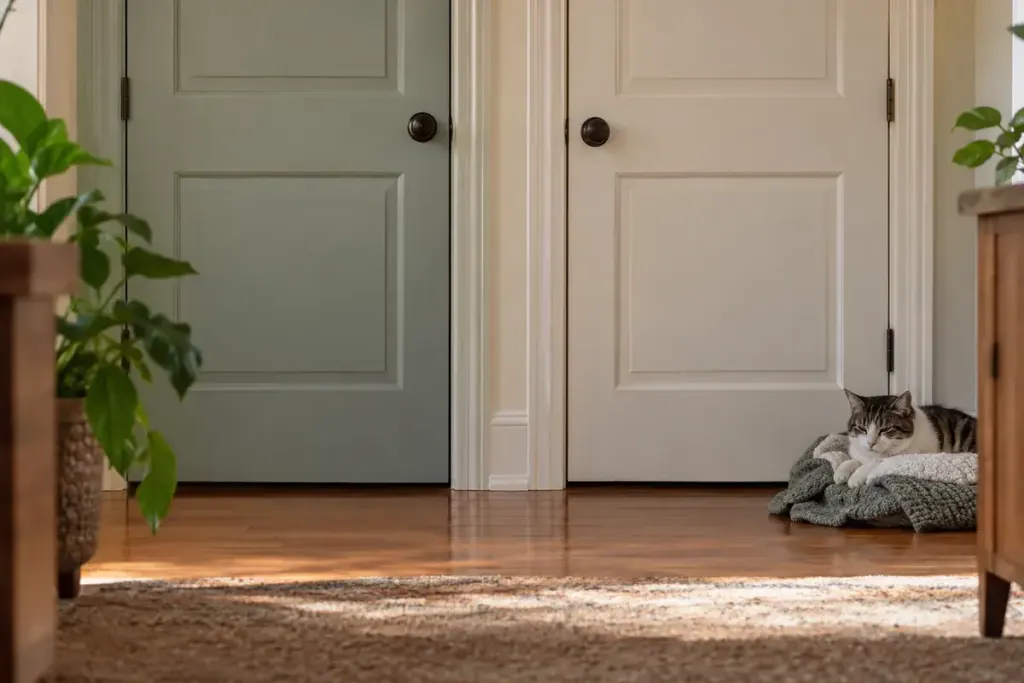
A new cat arrives and the household wants the first meeting to go well. Opening the carrier in front of the resident cat makes that meeting immediate, but not necessarily comfortable. A slower introduction can begin before the cats share a room.
Give the newcomer a separate starting space
Prepare a secure room with the resources the new cat needs, and allow time to settle. Keep the resident cat’s routine and access to its own resources as consistent as practical. Arrange veterinary advice about health needs and any necessary separation before introductions.
Cats Protection’s introduction guidance describes gradual scent exchange before direct contact. Follow its staged approach rather than treating scent swapping as a one-day shortcut to an immediate meeting.
Watch the response, not the calendar
An item carrying the other cat’s scent can be offered where the cat has room to investigate or move away. Do not push it into the cat’s face or remove access to a valued resting place to force an encounter. Calm curiosity, avoidance and distress are different responses.
Keep brief notes about what each cat does. One may settle quickly while the other needs more time. If either becomes distressed, step back in the process and seek advice when needed. There is no fixed number of days that guarantees friendship.
Later stages should preserve choice and separation where necessary. Do not hold cats together or allow a confrontation in the hope they will resolve it. Progress means both animals can remain comfortable, not that the owner has completed a schedule.
Some cats will not become close companions even with careful management. A veterinarian or qualified behaviour professional can help assess persistent difficulties. The practical goal is a safe, workable household in which each cat can eat, rest and move without being pressured by the other. Scent work is one part of that arrangement, not a promise that every pairing will succeed.