
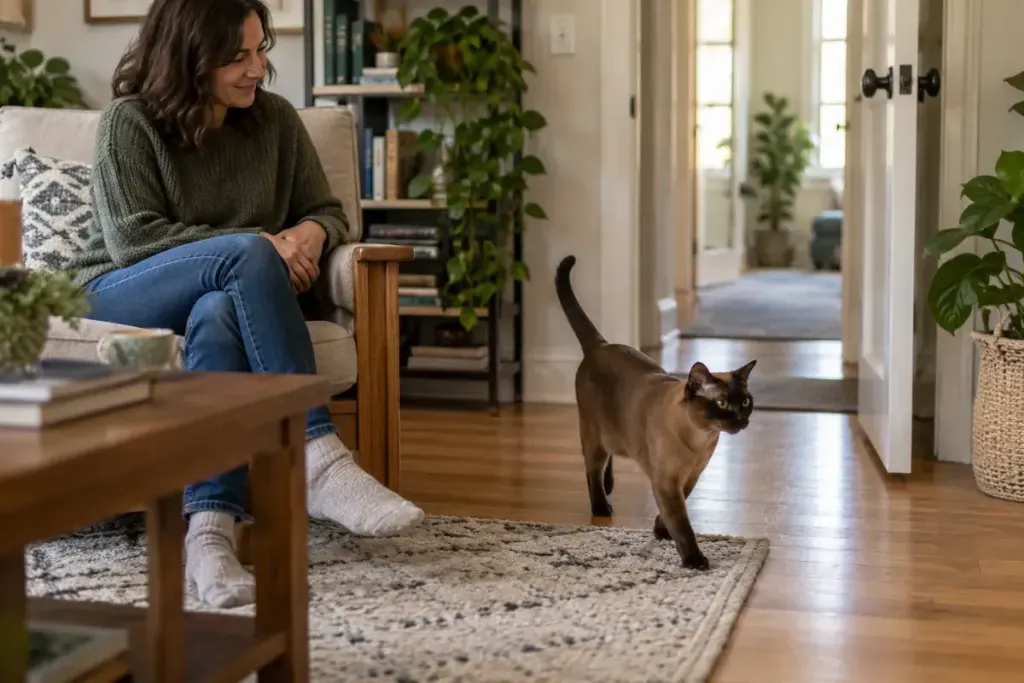
A visitor’s chair can accidentally block the route between a cat’s preferred resting place and a quiet room. The guest may be sitting calmly, yet the cat still has to pass close to unfamiliar legs and hands to leave.
Before people arrive, look at the room from the cat’s usual routes. Keep a clear indoor path to a safe retreat, while maintaining normal security around external doors and windows. An escape route from social contact should not become an unintended route outdoors.
Let the cat control the approach
Cats Protection’s guidance on meeting people recommends taking introductions slowly and allowing the cat to make the first move. It also highlights the value of a route away or a place to hide.
Ask guests to avoid reaching across that route, following the cat into its retreat or picking it up for an introduction. A cat walking past a chair is not necessarily asking to be touched.
Adjust the room before attention builds
Move bags, spare stools and other temporary obstacles that narrow familiar passages. Keep the retreat somewhere the cat can use comfortably and where visitors will not repeatedly disturb it.
For an illustrative arrangement, a chair beside the doorway might be moved farther along the wall, leaving a direct route from the sofa to the quiet room. The visitor can still join the conversation without sitting across the cat’s only convenient exit.
Notice changes rather than assigning a personality label
Some cats approach quickly; others prefer distance. Do not assume a breed description predicts how an individual should behave. If hiding or avoidance becomes unusual or persistent, seek veterinary advice to rule out a health problem and discuss appropriate support.
After the visit, restore any moved resources and check that the cat can return to its normal routine. There is no need to turn every successful visit into a longer or more intense introduction.
A small change in seating can give the cat a meaningful choice. That choice often matters more than persuading a guest to hold perfectly still while blocking the only way out.