
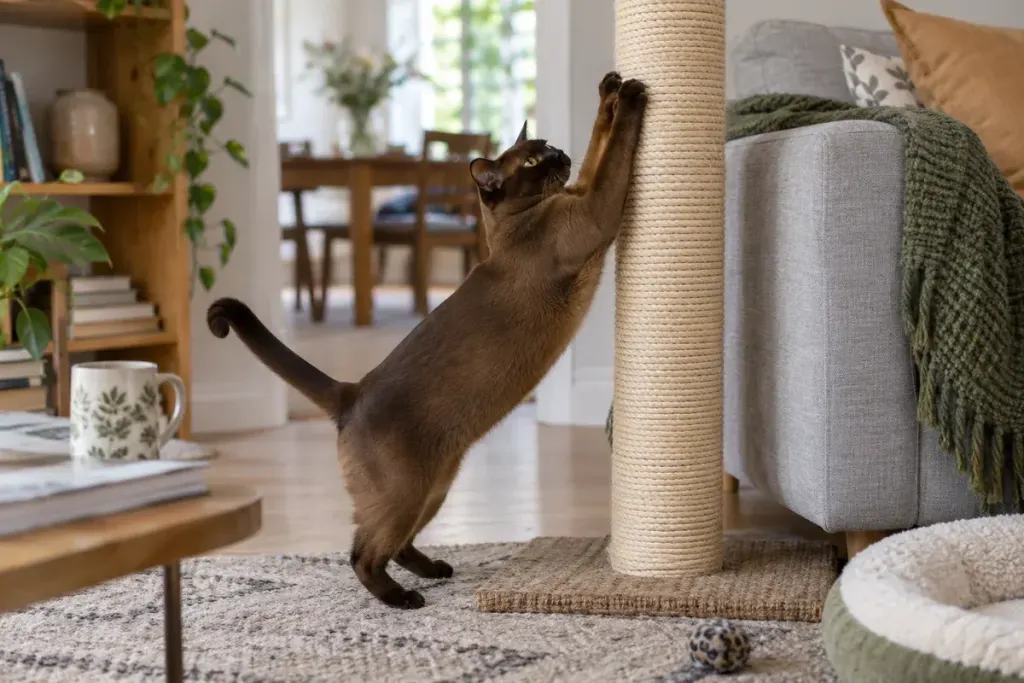
A new scratching post can sit untouched while the sofa remains popular. That does not necessarily mean the cat dislikes every post. The location, stability, height or scratching direction may not match what the cat is seeking.
Scratching is normal feline behaviour. The practical goal is to provide an acceptable place for it, not to persuade a cat to stop scratching altogether. Observe the existing choice before buying another decorative object.
Start where the behaviour happens
If the cat repeatedly scratches beside a favourite resting place or on a particular sofa corner, place an appropriate scratching surface nearby. A post hidden in a quiet unused room may be convenient for the household but irrelevant to the cat’s routine.
Cats Protection’s scratching guidance discusses offering suitable posts or pads and considering the cat’s preferences. Some cats favour a vertical stretch, while others use horizontal surfaces. Watch the direction and texture the cat already chooses.
Make the alternative comfortable to use
A vertical post should be stable and allow an appropriate stretch. If it wobbles or slides, the cat may avoid it. A horizontal scratcher needs to stay in place as well. Check construction and condition, replacing unsafe or badly worn equipment when needed.
Allow the cat to investigate voluntarily. Do not take its paws and drag them along the surface. Place the scratcher where it can be discovered naturally, and reward use in a way the cat enjoys without interrupting the behaviour.
- Observe location, direction and preferred material.
- Offer a stable alternative near the chosen area.
- Keep the route to it clear.
- Give the cat time to use it voluntarily.
Protect vulnerable furniture with a safe temporary covering while the alternative becomes familiar. Avoid punishment, which can increase stress and does not explain where scratching is welcome. If you later move the scratcher, do so gradually and watch whether it remains useful.
Sudden changes in behaviour or signs of pain deserve veterinary advice. A scratching problem can also be part of a wider environmental issue, so consider resting places, resources and household changes rather than treating the furniture in isolation.
The best scratching post is the one the cat can use confidently in a meaningful location. Start with the animal’s habits, then fit the household arrangement around a workable alternative.