
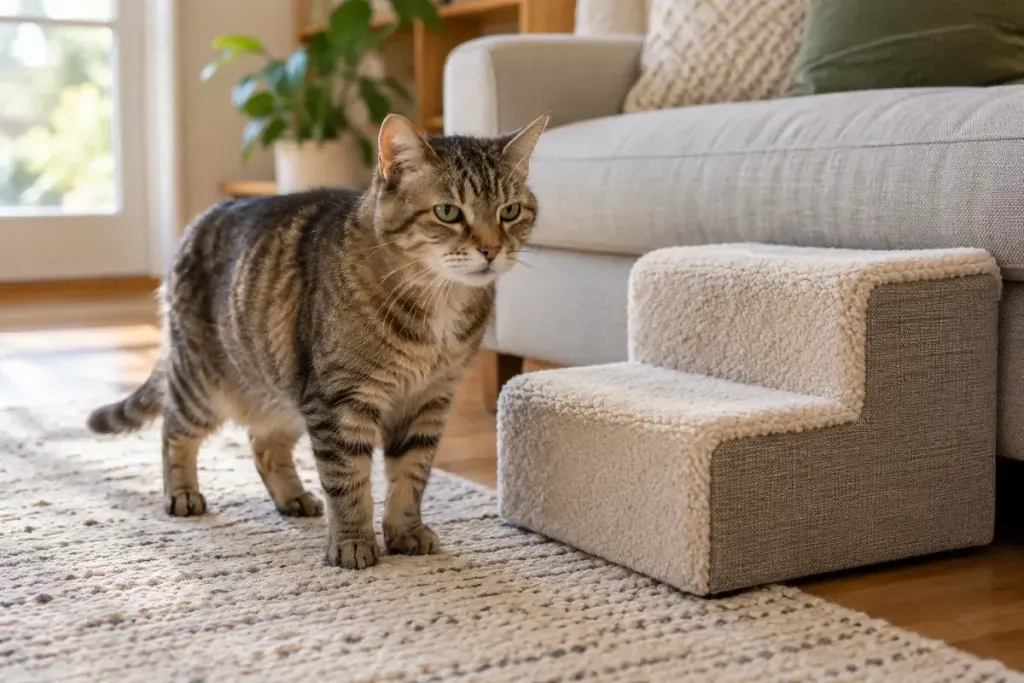
A cat that once reached the sofa in one movement now pauses, chooses a lower route or stays on the floor. Adding a step may improve access, but a new reluctance to jump deserves attention to the cat as well as the furniture.
Cats Protection’s arthritis guidance lists changes in jumping and climbing among possible mobility signs. Arthritis is one possible explanation, not a diagnosis that can be made from a missed jump. Injury and other problems also need consideration.
Describe the change without staging a test
Note when you first noticed it, which surfaces are involved and whether other activities have changed. Observe walking, grooming, play and litter-tray access. A short video of ordinary movement can be useful for a vet if it can be taken without distress or encouragement to attempt a difficult jump.
Do not repeatedly place the cat on a high surface to see whether it can get down. Avoid manipulating painful limbs or giving human pain medicine. Contact a vet promptly for a sudden change, apparent pain or difficulty moving; severe symptoms need urgent advice.
Make the environment easier while seeking guidance
Provide stable, accessible routes to familiar resting places and essential resources. Keep surfaces nonslip and avoid wobbling improvised steps. Make changes gradually where possible so the cat can choose a comfortable route.
Ask the vet which adjustments suit the assessment and how to monitor the response. A better route to the sofa can help daily life without explaining the underlying cause. Continue to record whether movement and behaviour improve or worsen.
The useful comparison is with that cat’s usual habits, not an ideal of what an older cat should still do. Treat a change as information worth investigating, rather than dismissing it as stubbornness or automatically accepting discomfort as part of age.