
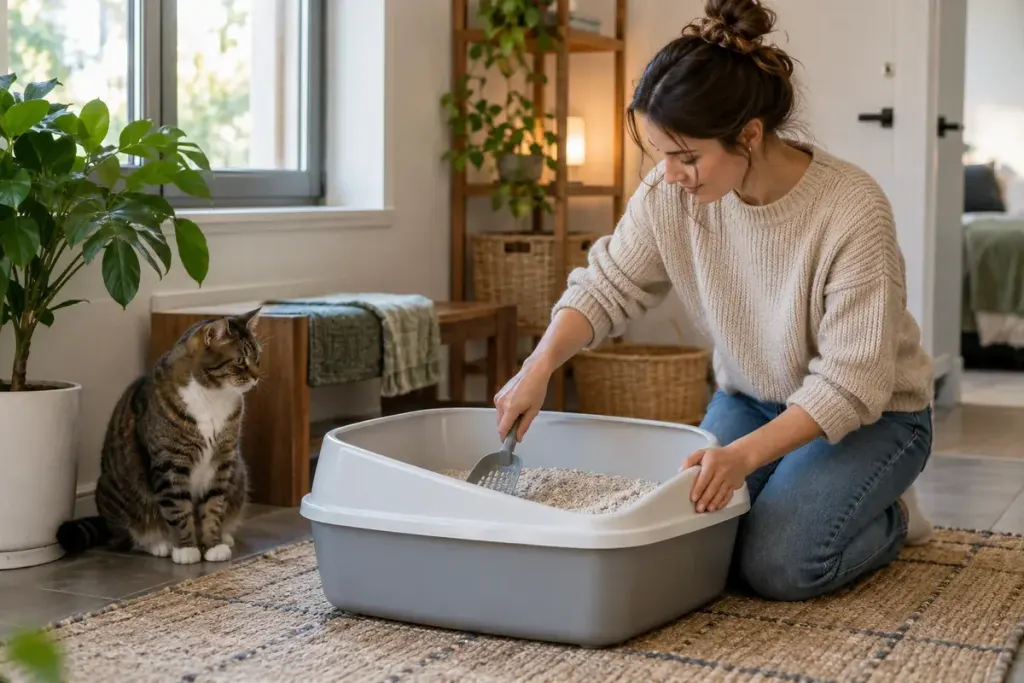
You clean the tray every day, which makes it one of the best places to notice a change. A different clump pattern, repeated visits or toileting elsewhere can provide useful information—but it should not become a home diagnosis.
Changes can have medical or environmental causes. The first question is whether the cat needs prompt veterinary attention, not whether a new litter product will solve the problem.
Know which signs cannot wait
Cats Protection’s urinary-problems guidance advises veterinary assessment for signs such as straining, pain or passing very little urine. A suspected blocked bladder is an emergency. Contact a vet immediately if the cat cannot pass urine or repeatedly strains with little or no output.
Do not wait to complete a diary when urgent signs are present. Do not give human medicines or try to press the abdomen. If you are unsure whether the cat is straining to urinate or defecate, describe what you see and ask the vet for direction.
Record observations that help the conversation
Note when the change began, how often the cat visits, whether anything is produced and any signs of discomfort. Add changes in appetite, drinking, energy or behaviour. Photographs can sometimes help, but ask the clinic what it needs rather than delaying care to collect evidence.
In a multi-cat home, be honest about which observations you can attribute to which cat. An unusual tray does not identify the animal responsible. The vet can advise how to gather information without creating unnecessary stress.
Describe the environment too
Tell the vet about changes in litter, tray location, household activity or access. A new washing machine beside the tray or another animal blocking the route may be relevant. These details do not rule out illness; they belong alongside the health assessment.
Avoid punishment for accidents. Clean affected areas appropriately and maintain accessible, suitable toileting facilities while following professional advice. Sudden simultaneous changes to every tray can make the situation harder to interpret.
Keep the follow-up specific
After assessment, confirm what improvement to watch for, how treatment should be given and when to contact the clinic again. Record the agreed plan rather than relying on memory during a stressful visit.
The daily tray check is valuable because it makes changes visible. Its purpose is to support timely care—not to replace the veterinarian with a guess based on one unusual morning.