
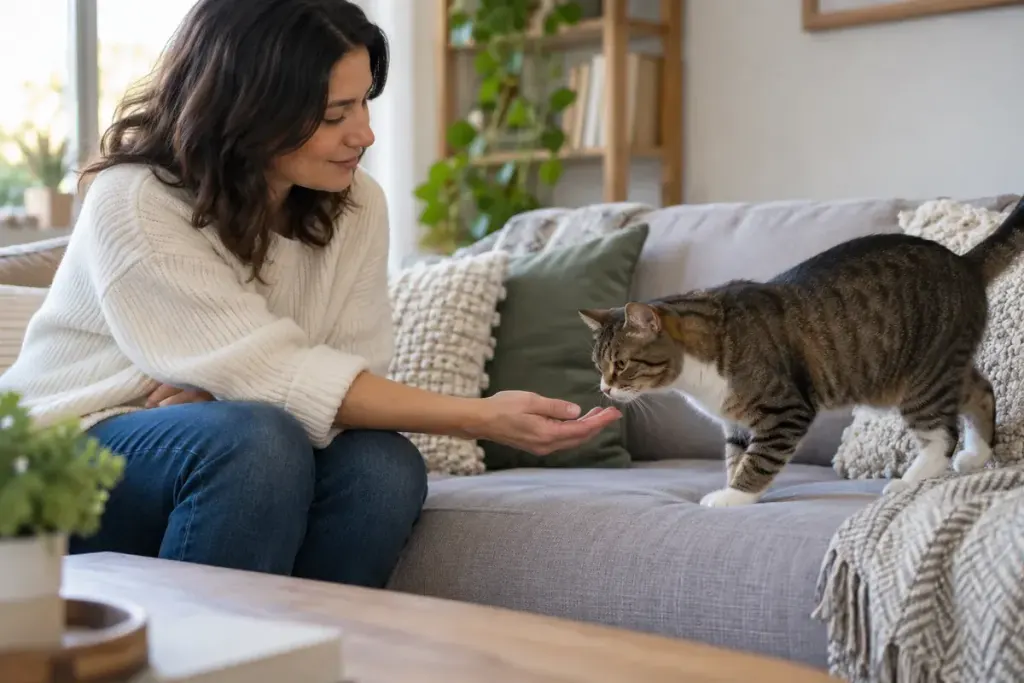
A cat approaching your chair may want company without wanting to be carried. Treating every approach as an invitation to pick the cat up can make an otherwise friendly interaction less comfortable. Pause and watch what the cat chooses to do.
Cats Protection’s handling guidance advises against picking up a nervous cat that is reluctant to approach or showing stressed body language. Individual preferences matter; a breed description cannot tell you whether a particular cat enjoys being lifted.
Start at the cat’s level
Allow the cat to approach and offer a calm interaction without immediately reaching around its body. Notice whether it remains engaged or moves away. A cat that steps back, stiffens or tries to leave is giving information worth respecting.
If lifting is appropriate and the cat is comfortable with it, use the recommended supportive technique rather than suspending it by the front legs or scruff. Keep the body supported and the interaction brief. Put the cat down safely when it wants to leave, before struggling escalates.
Choose an alternative when carrying is unnecessary
For companionship, sitting nearby may be enough. For moving between spaces, a familiar carrier or a trained cue can sometimes be more suitable. Necessary veterinary handling, medication and grooming deserve a plan with the relevant professional if the cat finds them difficult.
- Avoid surprising a sleeping or eating cat with a lift.
- Supervise children’s interactions closely.
- Keep the environment calm and the escape route clear.
- Ask a vet about a new reluctance to be touched or lifted.
A sudden change in handling tolerance can have several causes, including discomfort, so do not assume it is simply stubbornness. Giving the cat a choice where possible helps preserve trust while you work out what kind of contact it actually enjoys.