
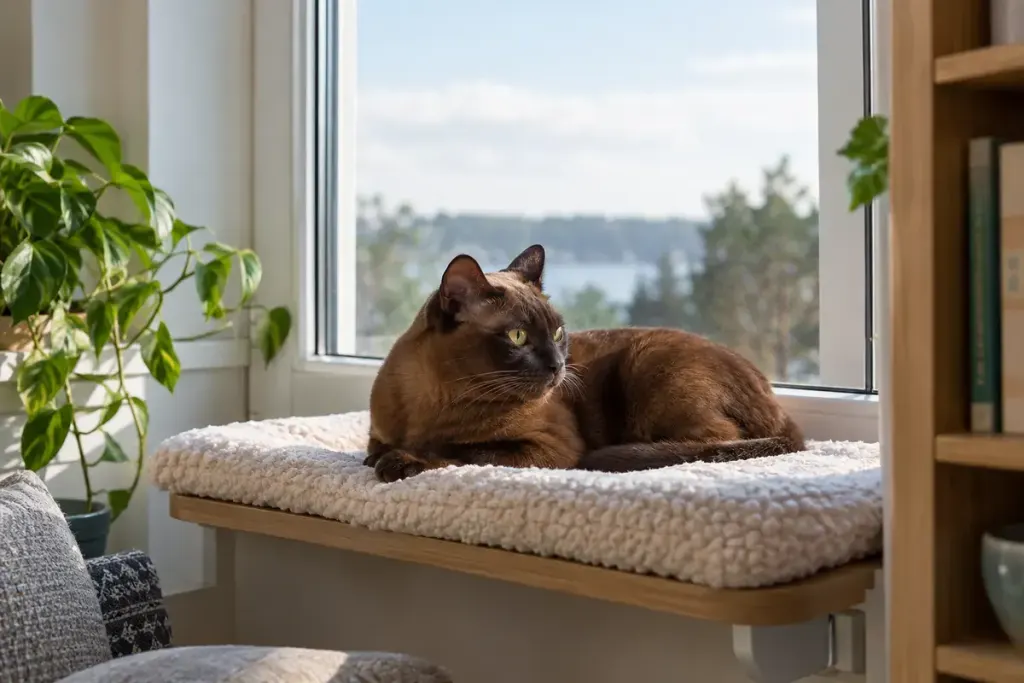
A sunny view can make a window perch look irresistible to a cat owner. The cat still needs a comfortable way to reach it, enough room to settle and a reliable place to land. Start with those practical details before choosing the prettiest cushion.
Observe where your cat already rests and how they get there. A confident young jumper and an older cat that prefers small steps may need different arrangements. New hesitation or difficulty moving is something to discuss with a veterinarian rather than solve by encouraging a higher jump.
Build the approach into the plan
Choose a perch designed for the intended use and follow its weight limits and installation instructions. Check the support, fixings and surface regularly. Do not rely on a loose board, unstable stack of furniture or an improvised attachment.
Keep the approach and landing area clear. A nearby stable step may suit some cats better than a long leap, but it should not create a route to a hazard. There should be enough space for the cat to turn and leave without feeling trapped.
The view must remain protected
An ordinary insect screen is not automatically a safe barrier for a cat. Cats Protection’s indoor-cat guidance discusses the falling risk at open windows and balconies and the need for appropriate protective arrangements.
Keep the window closed unless a suitable, securely installed cat-safe system protects it. Consider the whole opening, including gaps and tilt-window hazards. Keep blind cords and other dangling loops out of reach.
Sunlight can change through the day, so make sure the cat can leave the warm spot and choose another resting place. A washable surface is useful, but it should stay secure rather than sliding as the cat steps onto it.
Introduce the perch without placing or holding the cat on it against their wishes. Let them investigate at their own pace. A well-planned perch is an option in the home, not a performance the cat owes you because you installed it.