
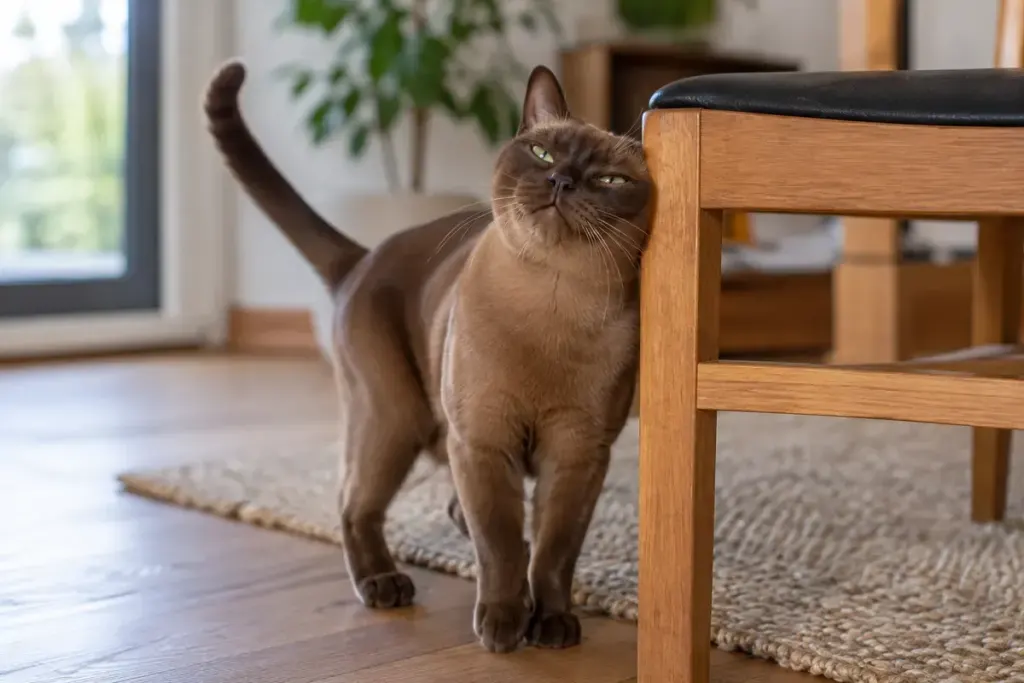
A cat walks past a chair, turns its head and presses a cheek along the corner. Moments later it may do the same to your hand. The movement is part of a sensory world that people cannot fully read just by looking at the furniture.
Cats Protection explains that cats have scent glands around the cheeks, chin and other areas. Rubbing can transfer scent and help mark people or objects as familiar. It should not be reduced to a single human sentence such as “this belongs to me.”
Watch what happens around the rub
Notice whether the cat approaches voluntarily, how its body moves and what it does afterwards. A relaxed pass along a chair differs from repeated rubbing accompanied by obvious discomfort. Context makes the observation more useful than treating one gesture as a complete emotional diagnosis.
For an original observation exercise, record where the cat rubs during an ordinary day. You might notice favourite corners or objects at head height. Keep the routine undisturbed; there is no need to move the cat or provoke the behaviour for a photograph.
Let the cat control contact
If a cat approaches your hand, allow it to choose the interaction and stop when it moves away or shows discomfort. A cheek rub is not blanket permission to hold the animal, touch every body area or continue petting indefinitely.
Visitors can benefit from the same instruction. Quietly allowing a cat to approach is more considerate than reaching after it because it rubbed against someone else a few minutes earlier.
Take unusual changes seriously
Persistent rubbing of one area, skin damage, swelling, scratching or a sudden change from the cat’s usual behaviour warrants veterinary advice. Scent communication is a normal explanation for many everyday rubs, but it should not be used to dismiss signs of irritation or pain.
Keep any video short and natural if it will help the vet understand the pattern. Describing when the change started is more useful than confidently assigning a motive to every movement.