
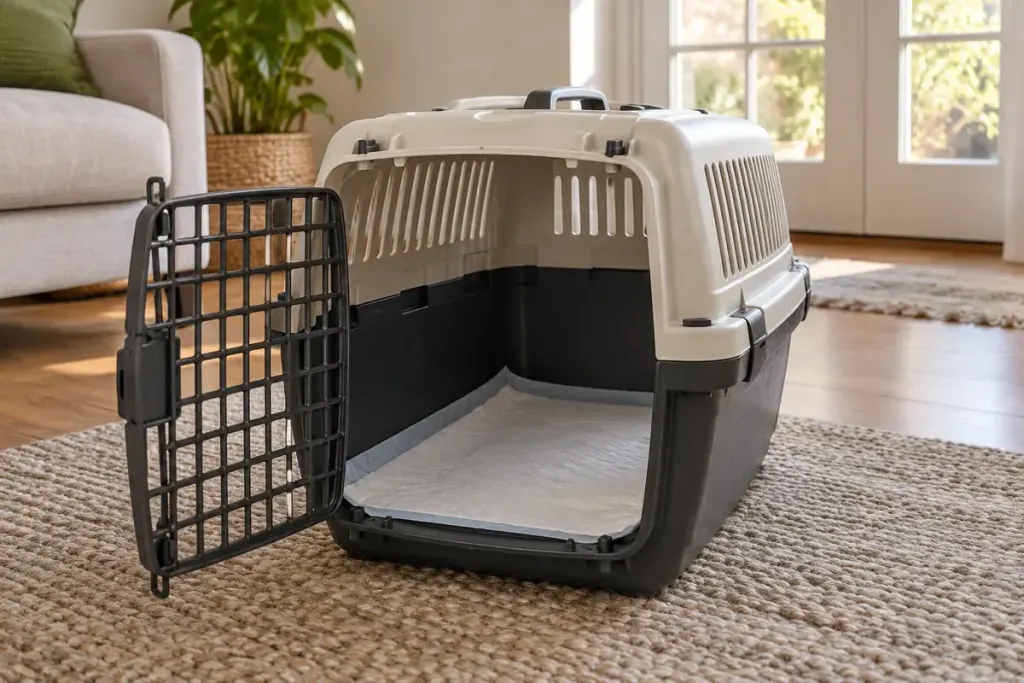
A generous towel folded several times can turn a roomy cat carrier into a cramped box. When preparing the inside, look at the space left for the cat and whether the bedding will stay reasonably flat.
Cats Protection’s carrier guidance recommends absorbent bedding such as newspaper or a washable towel or blanket to manage toileting accidents. The liner is part of a practical travel setup, not a substitute for a secure, appropriately sized carrier.
Fit the bedding to the base
Check the carrier while it is empty. Lay the chosen material over the floor without stuffing excess into the doorway or ventilation openings. Avoid loose loops, damaged fabric or bulky folds that could catch a claw or obstruct the closure.
Lift and set down the empty carrier as you normally would. If the liner immediately slides into a heap, reconsider its size or the carrier manufacturer’s recommended bedding. Do not add improvised fasteners where a cat could chew or become caught in them.
Prepare for the return journey too
Pack a spare liner and a separate bag for soiled material. Keep these outside the carrier so the cat retains the intended space. A clean outward trip does not guarantee the same on the way home.
If bedding needs changing during a veterinary visit, ask staff how to do that safely in a secure room. Do not open a carrier beside a road or in an unsecured car park because the liner looks untidy.
After use, follow the carrier and fabric cleaning instructions, then allow both to dry before storage. Check the floor, seams and catches while the bedding is removed. A clean liner can otherwise hide a damaged base.
Keep the travel setup simple enough to repeat: suitable absorbent material, adequate room, unobstructed ventilation and a spare ready for use. For a cat with a medical condition or unusual travel needs, ask the veterinary team about the arrangement before leaving home.