
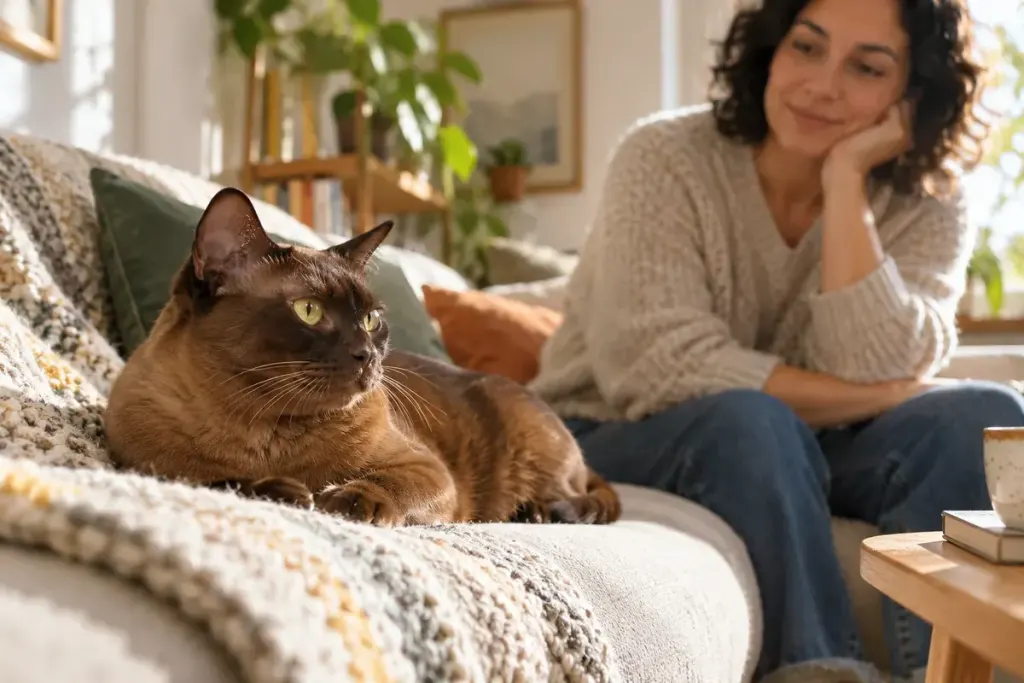
A cat resting nearby looks towards you, then narrows its eyes. Rather than responding with an intense stare or reaching immediately, you can try a gentle slow blink and give the cat space to choose what happens next.
University of Sussex researchers describe studies of slow blinking as a form of positive communication between cats and humans. Their findings concern observed tendencies, not a guarantee that every cat will approach or enjoy interaction at every moment.
Make the invitation easy to decline
Stay at a comfortable distance while the cat is settled. Soften your gaze, narrow your eyes gently, and briefly close them without leaning into the cat’s space. Then look away and wait. There is no need to repeat the movement insistently until the cat responds.
Observe the whole situation rather than one eye movement. A cat that turns away, moves off, or appears uncomfortable should be allowed to disengage. Do not use a slow blink as permission to pick up a cat that has not chosen closer contact.
For a household observation note, write the context: where the cat was resting, your distance, and whether it remained relaxed or chose to leave. Avoid assigning a dramatic meaning such as “forgave me” to a single response.
Burmese cats are individuals, just like cats of other breeds. A reputation for sociability does not remove the need to respect preferences, rest, and boundaries. Let visitors learn the same quiet approach instead of crowding around to test a trick.
If eye narrowing is persistent, one-sided, or accompanied by discharge or other concerning changes, seek veterinary advice rather than assuming it is communication. A friendly interaction and a possible eye problem belong in different conversations.