
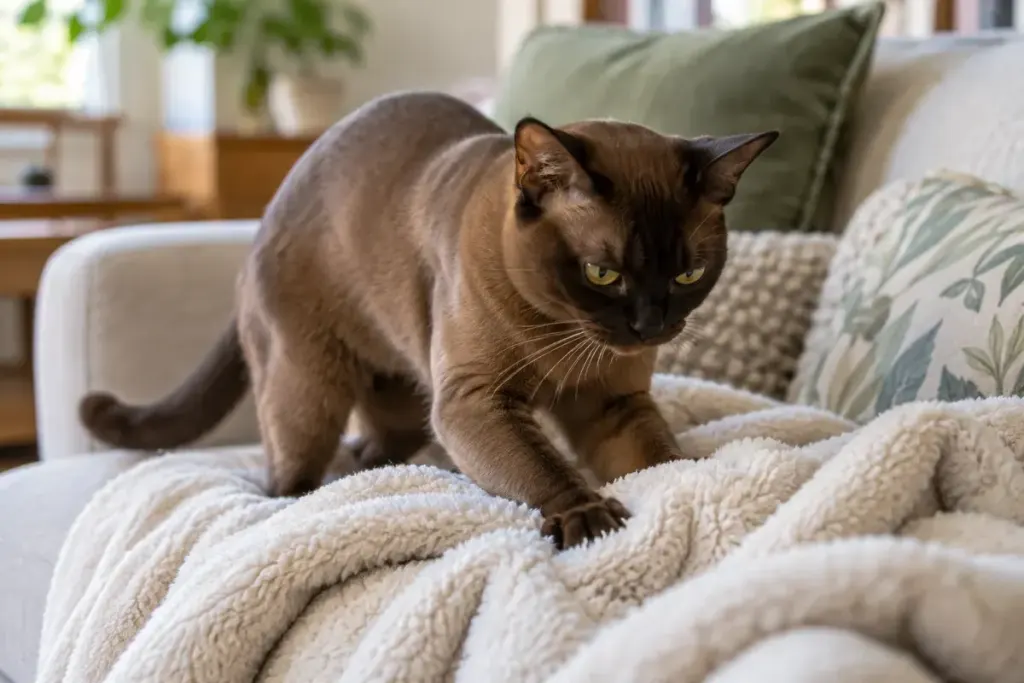
A cat settles on a blanket and begins pressing its front paws in a slow alternating rhythm. This familiar action is often called kneading or “making biscuits”. It can be part of a relaxed routine, but it is more useful to observe the whole cat than to assign one guaranteed meaning to a single movement.
Cats Protection’s explanation of kneading connects the behaviour with kittenhood. Its behaviour guide also describes kneading on soft surfaces in adult cats. The fact that a behaviour is familiar does not remove the need to notice changes in an individual animal.
Look at the setting
Does kneading happen on a favourite blanket before sleep? Is the cat choosing to approach and settle? Note the posture, facial expression and what happens before and afterward. A brief record over several ordinary occasions is more informative than one cropped video.
If claws make lap time uncomfortable, place a suitable soft blanket between the cat and your clothing or gently offer another comfortable surface. Avoid punishing the cat for kneading or holding it in place. Let it choose whether to stay.
Keep blankets in good condition and watch for chewing or swallowing fabric, which is a different concern from pressing paws into it. Do not assume every behaviour involving a blanket belongs in the same category.
A new, persistent or markedly changed behaviour deserves attention, particularly if it appears alongside pain, appetite changes, difficulty moving or another health concern. Contact a veterinarian for advice rather than interpreting the change solely through an affectionate label. If you can safely record a short example without disturbing the cat, it may help describe what you have observed.
There is no need to rank affection by how much a cat kneads. Cats differ in their habits and preferred interactions. The useful goal is a comfortable environment and an observant relationship, where a familiar routine is enjoyed without overlooking the individual animal’s changing needs.