
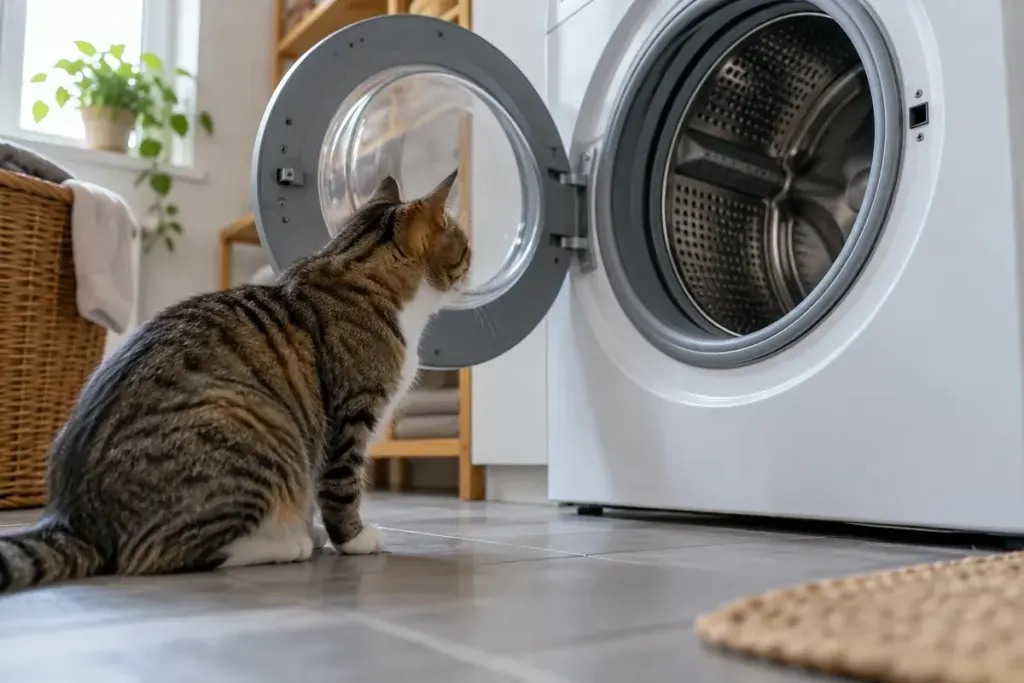
An open washing machine can look like a sheltered hiding place to a curious cat. A pile of laundry can make it harder to notice an animal inside. The safest routine checks the appliance itself rather than assuming the cat was in another room a few minutes ago.
Cats Protection’s home-safety guidance advises keeping washing-machine and tumble-dryer doors closed and checking for cats before switching them on. Build that check into the sequence every person in the household uses.
Make the check the last step before closing
Look into the drum and move laundry enough to see that it is clear. Keep the cat out of the laundry area while loading if possible. If you step away with the door open, check again when you return; the earlier inspection no longer covers the interval.
For an invented household arrangement, one person loads the machine and another starts it later. The person pressing start still performs the check. A handover such as “I already looked” should not replace a fresh look when the appliance has remained accessible.
Keep the room less inviting
Store detergents and laundry products securely, follow their safety instructions and clean spills promptly. Offer the cat comfortable hiding and resting places elsewhere so an appliance is not the only quiet enclosed space available.
Where an appliance manufacturer recommends airing the drum between uses, manage access by keeping the cat out of the room rather than leaving an attractive opening freely available. The appliance-care routine and the animal-safety routine need to work together.
Take a suspected incident seriously
If you suspect a cat has been trapped or exposed to an operating appliance, stop the machine safely and seek urgent veterinary advice. Do not wait for obvious symptoms before asking for help.
Include visitors, pet sitters and older children in the household explanation. A short visible reminder near the controls can support the habit, but it cannot do the inspection itself. The useful pause is the moment you actually look inside before the door closes.