
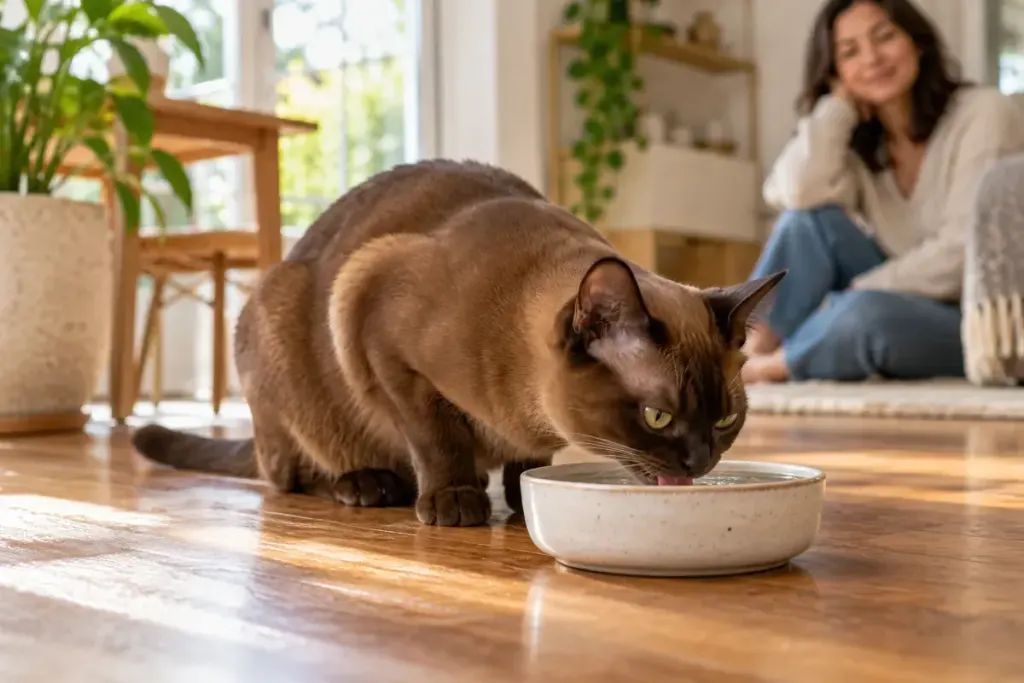
The water bowl seems to need refilling sooner, but there are two cats in the house and someone has started feeding more dry food. Is your Burmese drinking more, or has the household routine changed? You do not need to solve that question alone before contacting the vet. A few clear observations can make the conversation much more useful.
Notice a change from your cat’s own routine
Cats obtain water from food as well as drinking. Cornell’s feline hydration guide explains why food moisture belongs in the picture. A newly empty bowl is therefore a clue to investigate, rather than a diagnosis or a precise measurement of intake.
Write down when you first noticed the difference. Include a change of food, warmer rooms, new medication, a new fountain or another animal sharing the bowl. If you refill a measured amount, also note spills and shared access; otherwise the number can look more certain than it is.
Bring observations that help a vet ask the next question
- Has the litter tray changed, with larger or more frequent wet patches?
- Has appetite, body weight or everyday activity changed?
- Is the cat visiting several water sources, rather than only using a newly attractive bowl?
- What food and medicines are being given, and when did those change?
Increased thirst and urination can occur with several conditions. Cornell describes them among signs of feline diabetes; that association does not establish that your cat has diabetes. Diagnosis needs veterinary assessment, not comparison with a single list of symptoms.
Contact your veterinarian about a persistent or clear increase in drinking, and seek prompt advice if the cat is also unwell. Keep fresh water available; restricting it is not a way to test whether the change is real. Do not postpone the call while trying to complete a perfect week-long chart.
A note such as “more drinking since Tuesday, larger wet patches, usual food unchanged” gives the clinic a useful starting point. It is more informative than either dismissing the change as a new habit or arriving certain of a diagnosis.