
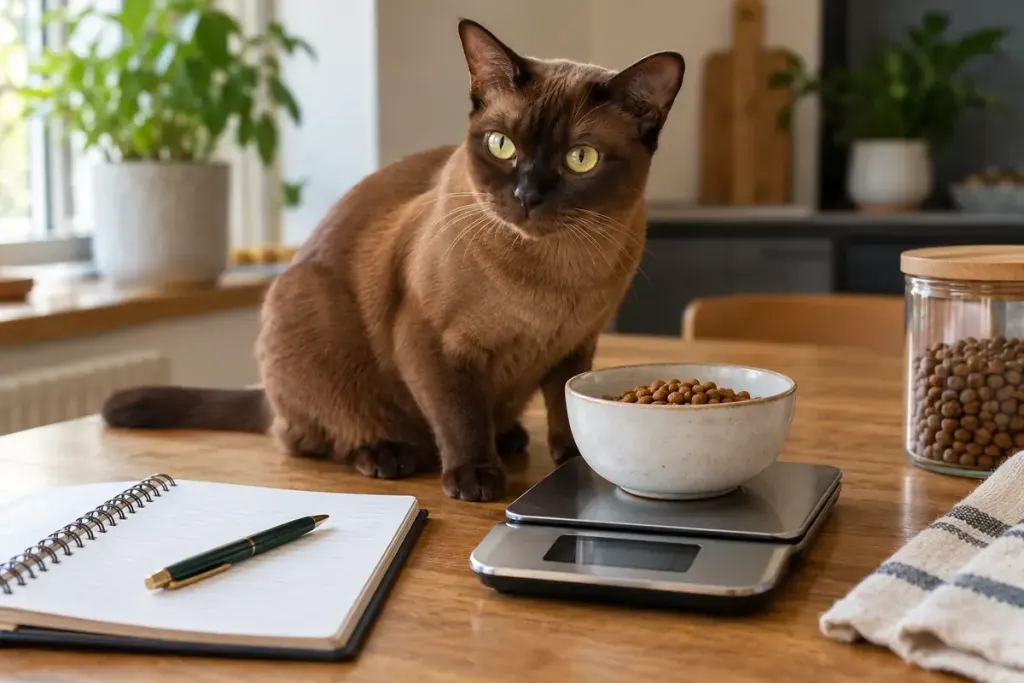
A bowl looks nearly empty, so one person tops it up. Later, another person sees a cat asking for food and adds a little more. By evening, nobody knows how much was offered or eaten.
Start with the daily allowance appropriate for the individual cat, its food and veterinary advice. Then measure that allowance. The bowl’s apparent fullness is an unreliable record, especially when several people feed the same animal.
Cats Protection’s feeding guidance recommends weighing food daily and considering treats within the overall allowance. It also cautions against crash dieting or starving an overweight cat.
Make the portion visible to the household
Use a suitable kitchen scale and tare the empty container before measuring. Follow the food’s storage guidance, and keep food-preparation equipment hygienic. Do not assume equal weights of different foods provide the same energy.
For dry food, a clearly labelled daily container can help authorised household members see what remains available. For wet food, use a written record and appropriate refrigerated storage rather than leaving a day’s portion out.
Record treats and any food used in enrichment activities. In a multi-cat home, note which cat receives each portion; a shared bowl can hide one animal eating another’s allowance.
Use the record to ask better questions
If food remains, record the amount offered and the amount left where practical. Also note changes in appetite or eating behaviour. Do not repeatedly reduce the allowance just because a single meal was unfinished.
A cat that stops eating, eats markedly less or seems unwell needs prompt veterinary advice. A feeding log can help that conversation, but it should not delay it.
Review the allowance when the diet or the cat’s circumstances change, with professional guidance where needed. Measuring food is a way to understand the routine; it is not a substitute for assessing health, body condition and the nutritional suitability of the diet.