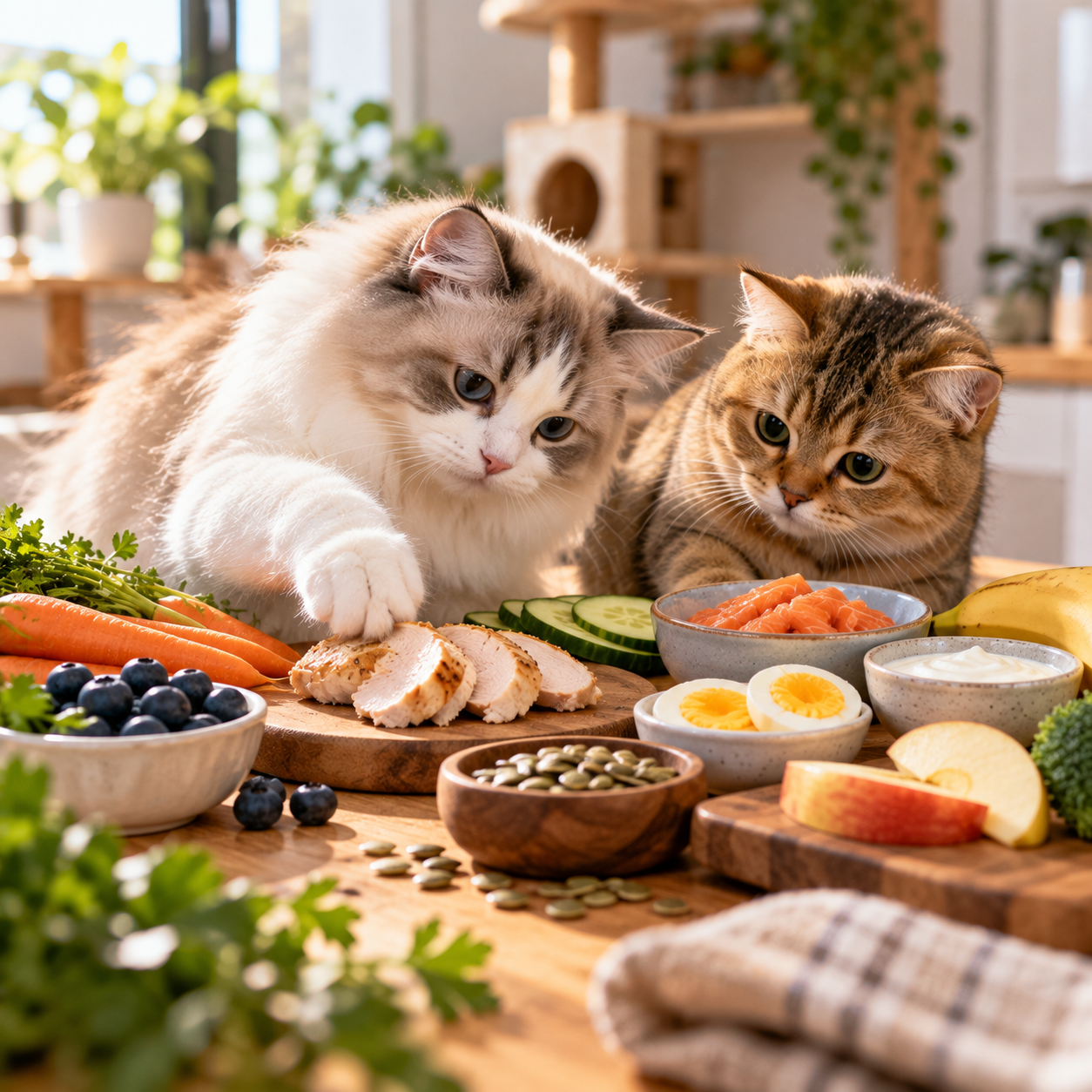
Cats can eat a handful of human foods as an occasional treat: plain cooked lean meat, cooked fish, fully cooked egg, and small amounts of a few vegetables and fruits. The rules are the same for all of them. Serve it cooked, plain, boneless and unseasoned, keep the portion tiny, and never let it replace a complete and balanced cat food.
Cats are obligate carnivores, so the meat and fish on this list are the most natural fit. The plant foods are fine as a novelty, but your cat doesn’t need them.
How much is “a treat”?
The World Small Animal Veterinary Association (WSAVA) says treats should make up less than 10% of a cat’s daily calories. Cornell Feline Health Center gives a slightly wider rule of thumb of 10 to 15%, and VCA Animal Hospitals also works from about 10%. Treat 10% as the ceiling, not the target.
In practice that budget is very small. WSAVA’s guide to feeding treats to your cat puts the daily treat allowance for an average healthy adult cat at roughly 18 to 28 kcal, depending on body weight. One ounce of some common human foods uses up all of it:
| Food (1 oz / 28 g) | Calories |
|---|---|
| Cooked salmon fillet | 39 |
| Lean cooked chicken breast, no skin | 47 |
| Lean turkey breast, no skin | 50 |
| Lean cooked beef | 64 |
So think in pieces the size of a fingernail, not spoonfuls. If you give a human-food treat, cut back on other treats that day.
11 human foods cats can eat
1. Cooked chicken breast
Plain cooked chicken is one of the most widely recommended treats. Cats Protection suggests boiling it, and the ASPCA advises serving lean meat cooked, boneless and unseasoned. Take off the skin and check for bones, because cooked bones can splinter and injure the gut. Don’t feed it as a whole meal: chicken alone is not nutritionally complete.
2. Cooked turkey breast
Turkey works the same way as chicken. Serve plain, cooked white meat without skin, bones or seasoning. Holiday turkey is often a problem because of the gravy, stuffing and butter, which can contain onion, garlic or a lot of salt. Set aside an unseasoned piece before you season the bird.
3. Lean cooked beef
Small pieces of lean beef, cooked through and trimmed of fat, are on the ASPCA’s list of meats you can share. Leave out seasoning and marinades. Beef is the most calorie-dense item on this list, so the portion should be smaller still.
4. Cooked salmon
Small amounts of cooked salmon are a suitable homemade treat, according to Cats Protection. Bake, poach or steam it with nothing added, remove all bones, and don’t serve it raw. Avoid smoked or cured salmon, which is heavily salted.
5. Plain cooked white fish
Cod, haddock and similar white fish, cooked plainly with the bones removed, are a gentle option. Skip anything battered, fried, breaded or cooked in butter. A few small flakes is plenty.
6. Fully cooked egg
VCA lists cooked egg among the foods many cats enjoy. Scramble or hard-boil it with no butter, oil, milk or salt, and make sure it is cooked through. Raw egg is a different story: the ASPCA warns that it can carry Salmonella or E. coli, and the AVMA discourages feeding cats raw or undercooked animal protein of any kind.
7. Plain cooked pumpkin
The ASPCA lists cooked, canned pumpkin as safe to share. Use plain pumpkin purée, not pumpkin pie filling, which has added sugar and spices. A small lick-sized amount is enough. Don’t use pumpkin to treat ongoing diarrhea or constipation without talking to your vet first.
8. Green beans
Both VCA and the ASPCA name green beans as a safe snack. Steam or boil them plain, or offer them raw, and cut them into small pieces so they aren’t a choking hazard. Canned green beans are often salted, so fresh or frozen is better.
9. Zucchini
VCA includes zucchini in its list of foods cats can safely enjoy. Lightly steamed, cooled and cut into small cubes is easiest for a cat to chew. Serve it without oil, salt or garlic, which rules out most leftover zucchini dishes.
10. Blueberries
Blueberries appear on both the VCA and ASPCA lists. Wash them and offer one or two, cut in half for smaller cats. Fruit contains sugar, so check with your vet before giving it to a cat with diabetes or a cat on a weight-loss plan.
11. Seedless watermelon
VCA lists seedless watermelon as a safe treat, and suggests cutting it away from the rind and removing the seeds first. A small cube is enough. Like other fruit, it is best kept rare for cats with diabetes or weight problems.
Foods cats should never eat
These are on the toxic lists from the ASPCA Animal Poison Control Center and WSAVA. Keep them out of reach, including in leftovers and sauces:
- Onion, garlic, leeks, shallots and chives, in any form, including powders. The ASPCA notes cats are especially sensitive, and these can damage red blood cells.
- Grapes, raisins, currants and sultanas. Cats Protection warns they can cause kidney failure.
- Chocolate, coffee, tea and other caffeine. These contain methylxanthines, which can cause vomiting, tremors, abnormal heart rhythm and seizures.
- Alcohol, including foods made with it.
- Raw yeast dough. It expands in the stomach and produces alcohol as it ferments.
- Xylitol, a sweetener found in some sugar-free gum, sweets, baked goods and peanut butter.
- Raw meat, raw fish, raw eggs and bones, because of bacteria and the risk of gut injury.
- Nuts, especially macadamia nuts. Most nuts are high in fat.
Milk and dairy aren’t poisonous, but WSAVA, Cornell and the ASPCA all point out that many cats are lactose intolerant, so the common picture of a cat with a saucer of milk often ends in an upset stomach. It’s best avoided. Cornell also cautions against making canned fish meant for people a regular habit, and Cats Protection adds that canned tuna can be high in salt and mercury.
The ASPCA’s list of people foods to avoid feeding your pets covers each of these in more detail. If your cat eats something on it, contact your vet or an animal poison control service straight away, and note what was eaten and roughly how much.
When to skip human food altogether
Some cats should not get any of the treats above without a vet’s say-so:
- Cats with kidney disease, diabetes, pancreatitis or another ongoing condition
- Cats with food allergies or sensitivities
- Cats on a prescription or therapeutic diet, where extra food can undo the diet’s purpose
- Overweight cats, where the treat budget may already be used up
- Kittens, which need a complete growth diet
For every cat, introduce one new food at a time in a very small amount. Watch for vomiting, diarrhea or loss of appetite, and stop if you see any.
A quick serving checklist
- Cook it fully, with no seasoning, butter, oil, onion or garlic.
- Remove all skin, bones, seeds and rinds.
- Cut it into small, bite-sized pieces.
- Keep all treats together under about 10% of daily calories.
- Offer it occasionally, not daily as a meal topper.
- Ask your vet before changing your cat’s diet, especially if your cat has a health condition.